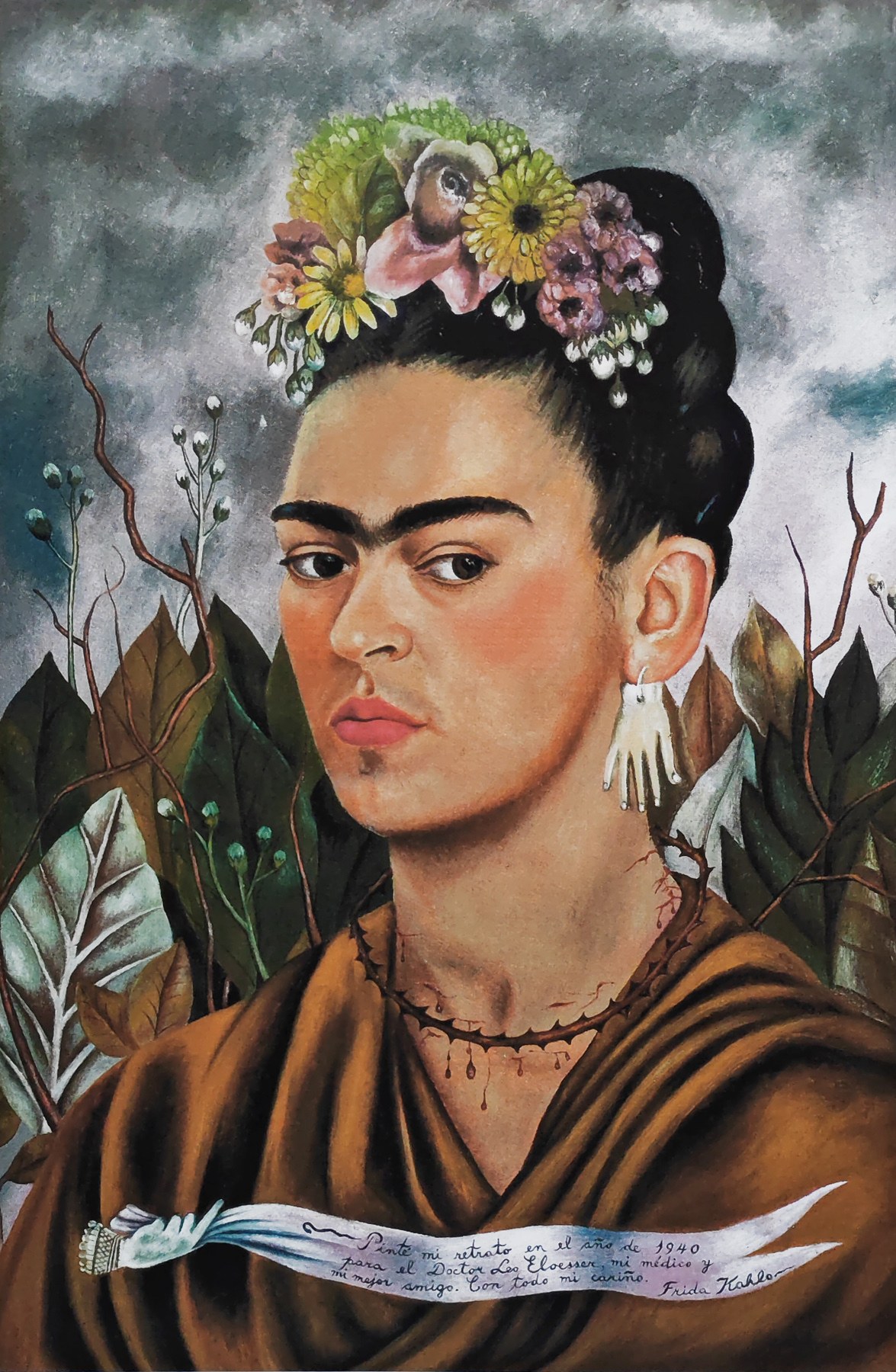
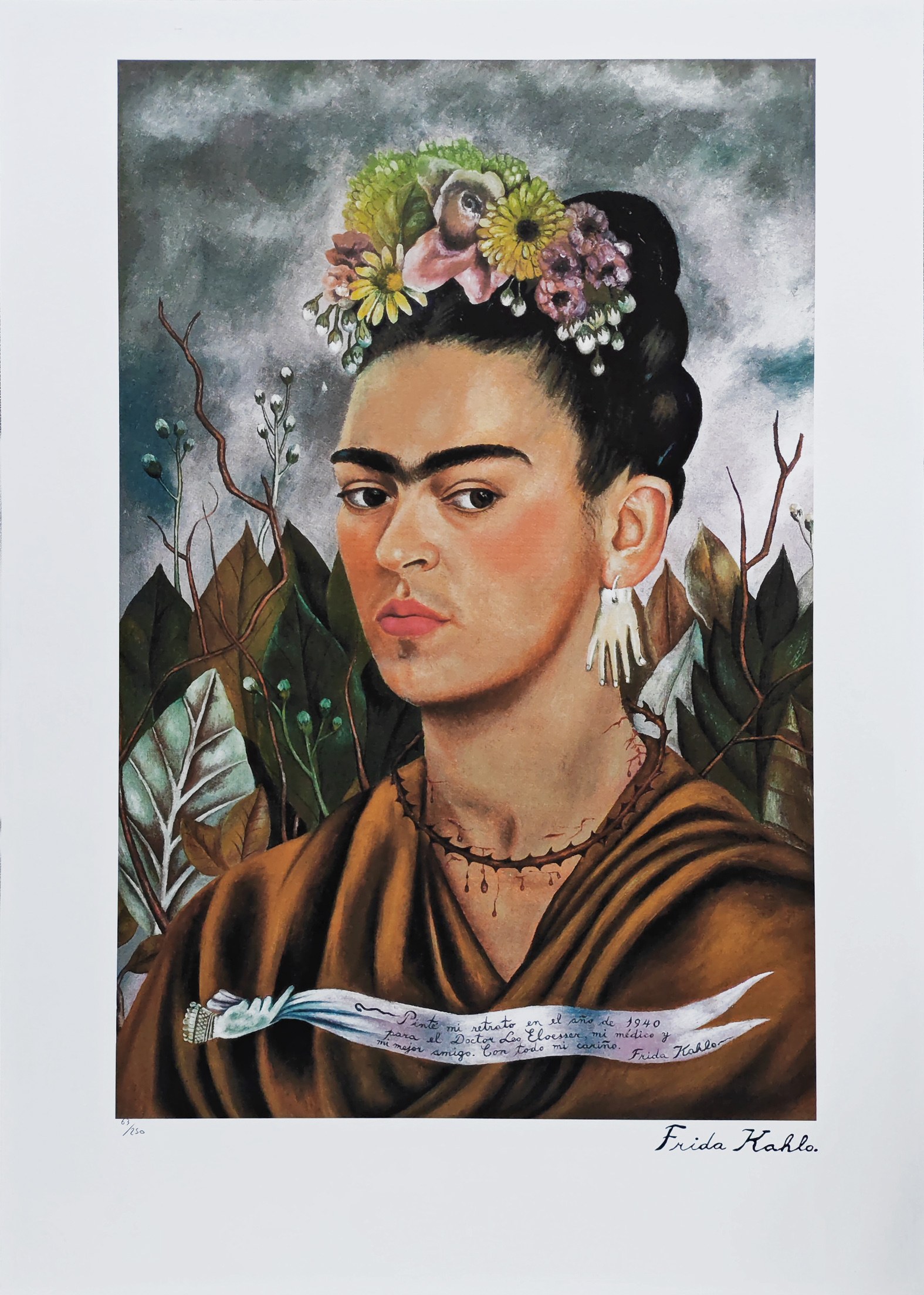
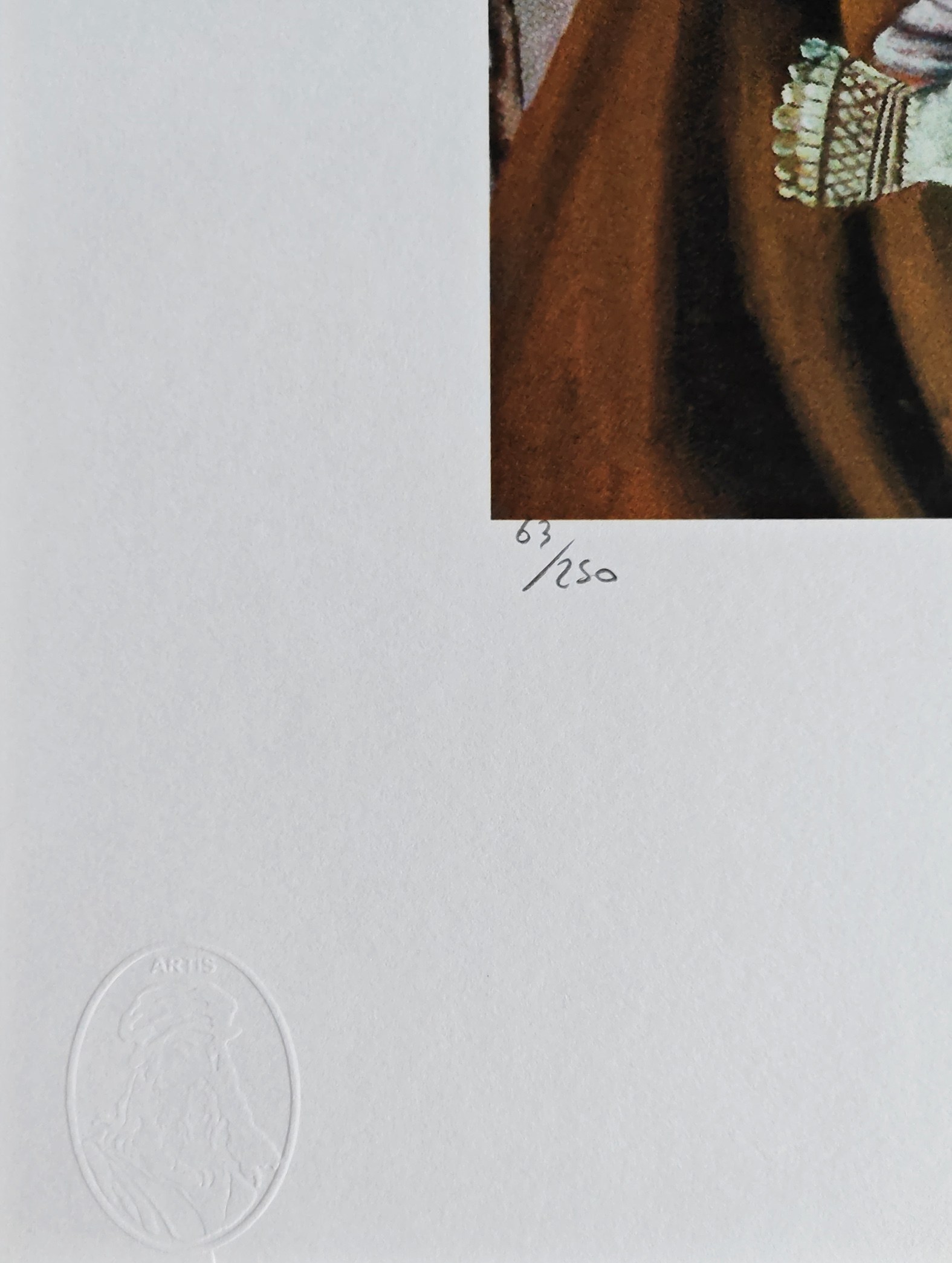
Print, limited edition on Fabriano Cotton Privilege paper.
Dimensions: 50 cm x 70 cm (sheet)
Each print is individually numbered.
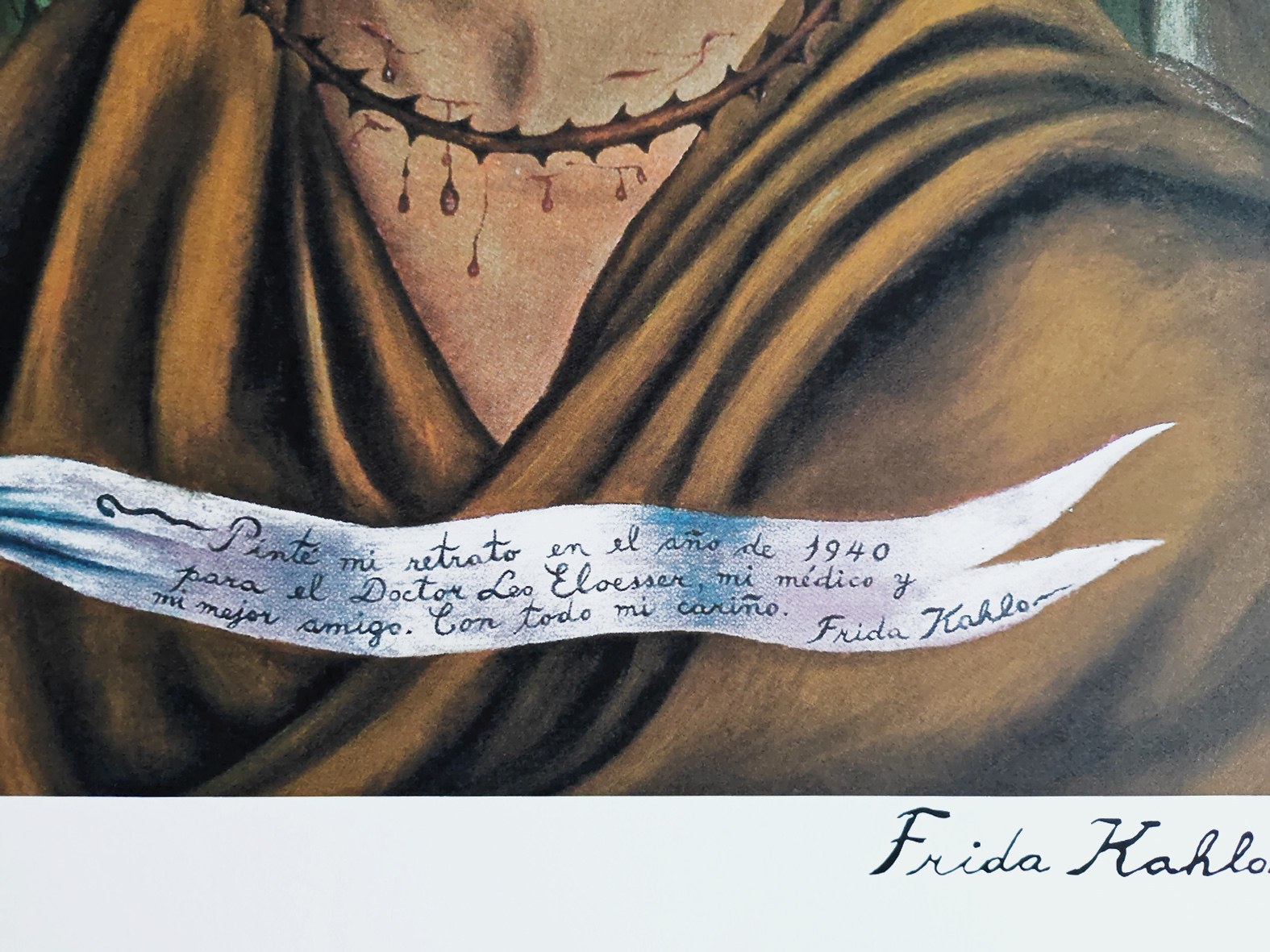
Inscription in pencil, top left: 63/250; bottom right: facsimile “Frida Kahlo.”
Dry stamp of the publisher at the bottom
Hologram on the reverse.
Condition: very good
Frida Kahlo was a Mexican painter who lived in the first half of the 20th century. She was born in 1907 into a large family in the suburbs of Mexico City. Her father was an artist—he worked in photography and painting. He inspired his daughter with his passion when she was eighteen—from that point on, Frida abandoned her dreams of becoming a doctor to devote herself to capturing the world, whether on canvas or through the lens of a camera.
Her art clearly drew on Mexican and Indigenous cultures. As a result, it was often regarded as a form of primitivism—that is, naive art—as well as folk art or surrealist art. The artist had health problems from childhood onward. At the age of six, she contracted polio, and a few years later, she was involved in a traffic accident. As a result, she suffered very serious injuries, including a spinal fracture. Although she managed to walk again after a long period of rehabilitation, she struggled with pain resulting from the accident for the rest of her life.
When analyzing Frida Kahlo’s work, we see influences of Symbolism and Realism, which led the painter to depict reality as it is, without attempting to “fix the world” through her art. Elements of Mexican culture are also evident—primarily in the themes depicted in her paintings. The central theme in Kahlo’s paintings is women’s lives. In her work, she focused on realism, always striving to portray her own life rather than a fictional world. The artist captures portraits, depicting women in various contexts, primarily in harsh and demanding work environments.