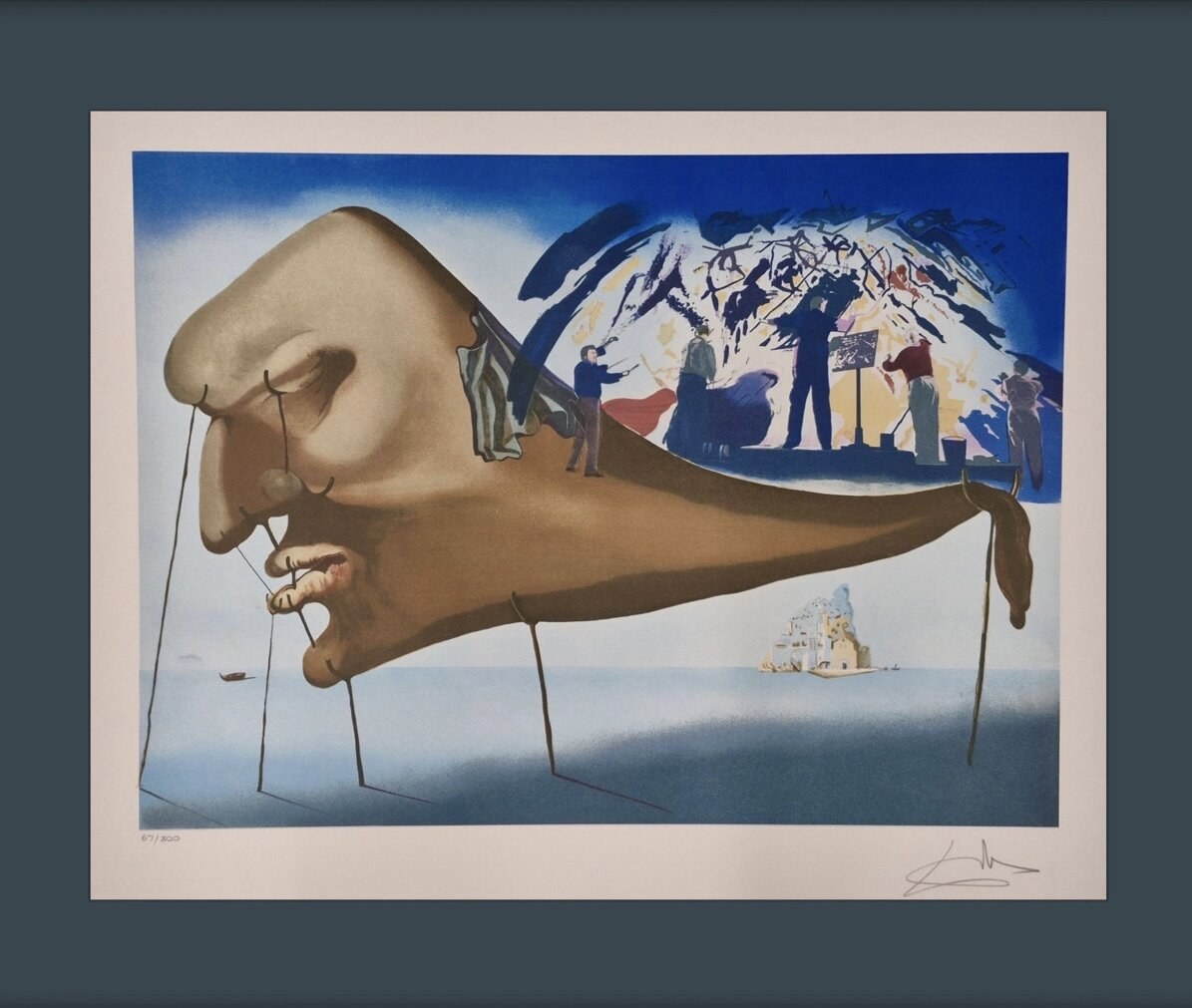
Color lithograph on Arches handmade paper, 51 x 55 in light passe-partout, 61 x 65 cm.
Limited edition, hand-numbered in pencil 67/300 and signed by the Artist.
Publisher: Jean Lavigne (Paris)
Jean Lavigne (Paris) is the publisher who published the famous "Changes in Great Masterpieces"(Metamorphoses of Great Masterpieces) portfolio in 1974. In this series, Dalí took his old motifs (such as "Dream" just now) and added new elements to them, including figures of musicians or an orchestra in the clouds.
The original painting was created in 1937. Dalí considered the dream to be a "monster" that is extremely heavy and as fragile as a soap bubble. The giant head is the central point. It represents a state of total disconnection from reality. It is almost devoid of a body, which emphasizes that only the mind matters during sleep.
A key "Dalíian" motif is the stilts (supports) Dalí claimed that if it were not for these stilts, the figure would immediately wake up and the "dream monster" would sink into nothingness. They support the eyelids, mouth and nose, suggesting that our subconscious is a very unstable structure, requiring external support to last. Dalí used to say that sleep is "the rest of the monster." Looking at this lithograph, we are not just looking at a sleeping figure, but a structure that allows us to escape reality. Without those thin sticks (stilts), the magic is gone.
The classic 1937 oil version has a rather desert landscape with a small dog and a building in the background. The presence of the orchestra indicates that the lithograph is from a later series (from the 1970s), where Dalí often made so-called "self-paraphrases. The artist liked to enrich his old motifs with new, surreal groups of figures (just musicians, Roman soldiers or angels). Thanks to the changes in composition, the prints became a separate work (a graphic original), rather than a copy of the painting. For Dali, music was often a symbol of the fluidity of time and the mood that "carries" a daydream.
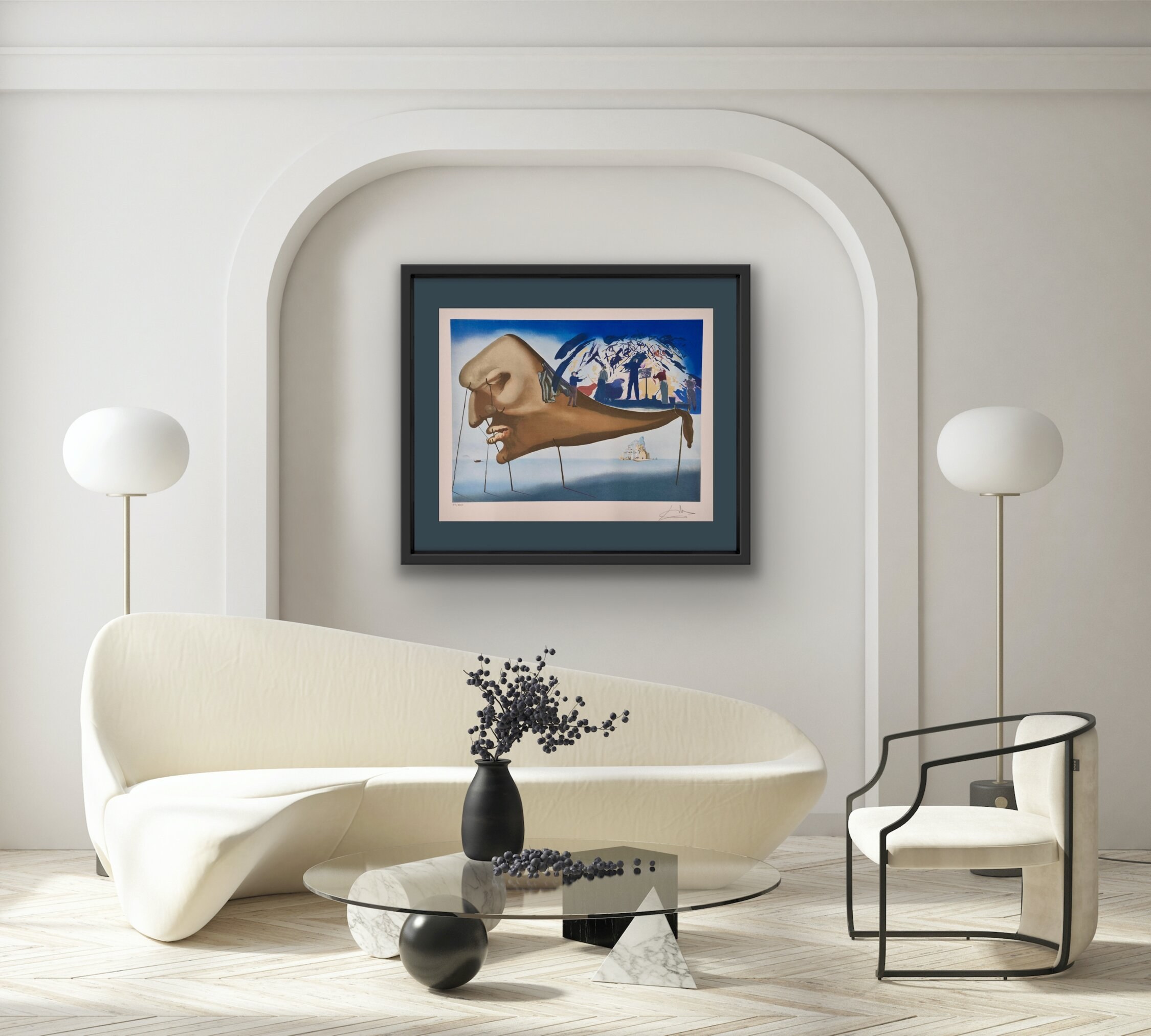
The framing shown in the visuals is for illustrative purposes only and does not constitute a commercial offer.