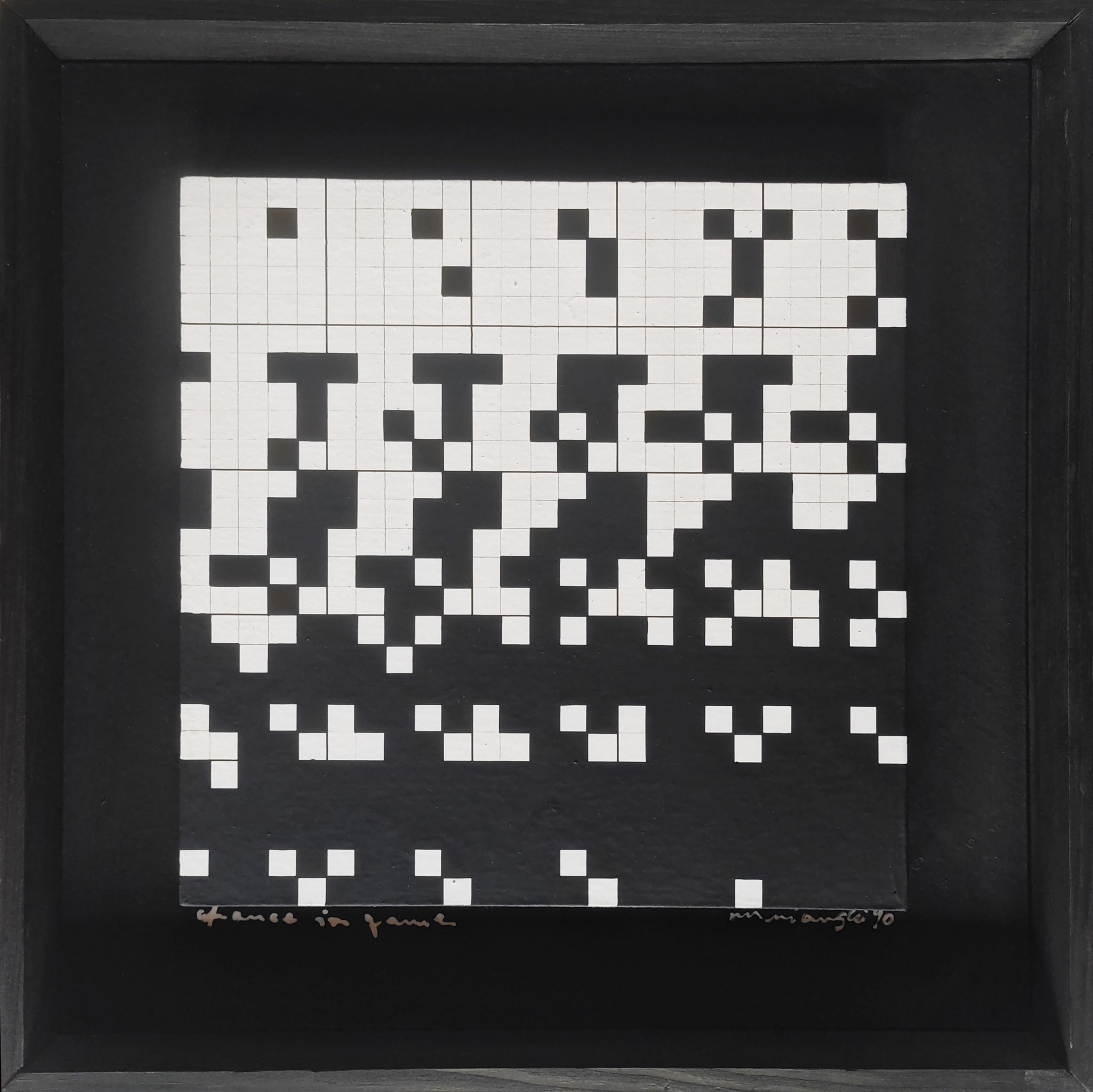
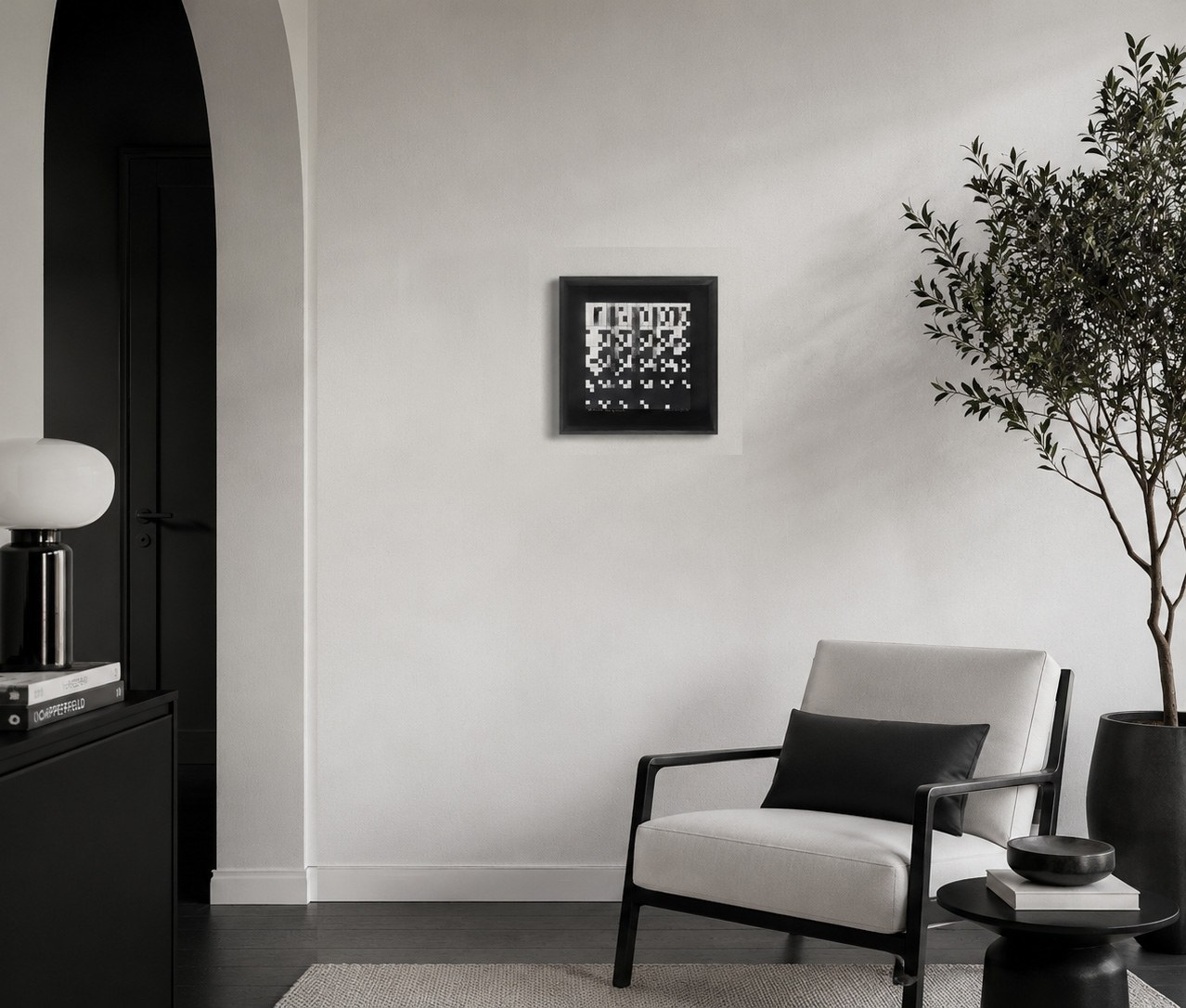
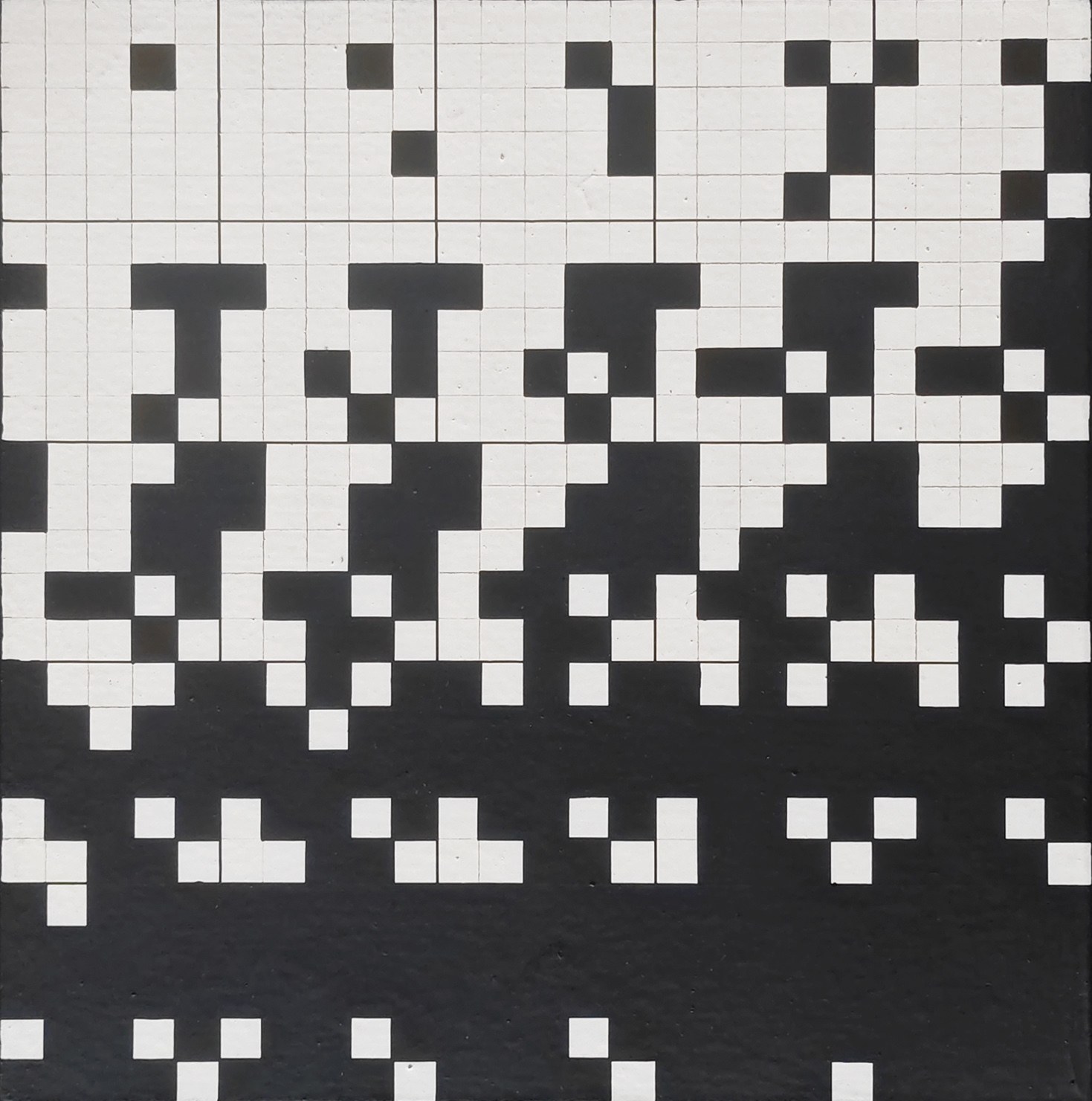
Chance in Game, 1990
acrylic and pencil / panel
work dimensions: approx. 25 × 25 cm
Dimensions with frame: approx. 36.5 × 36.5 cm
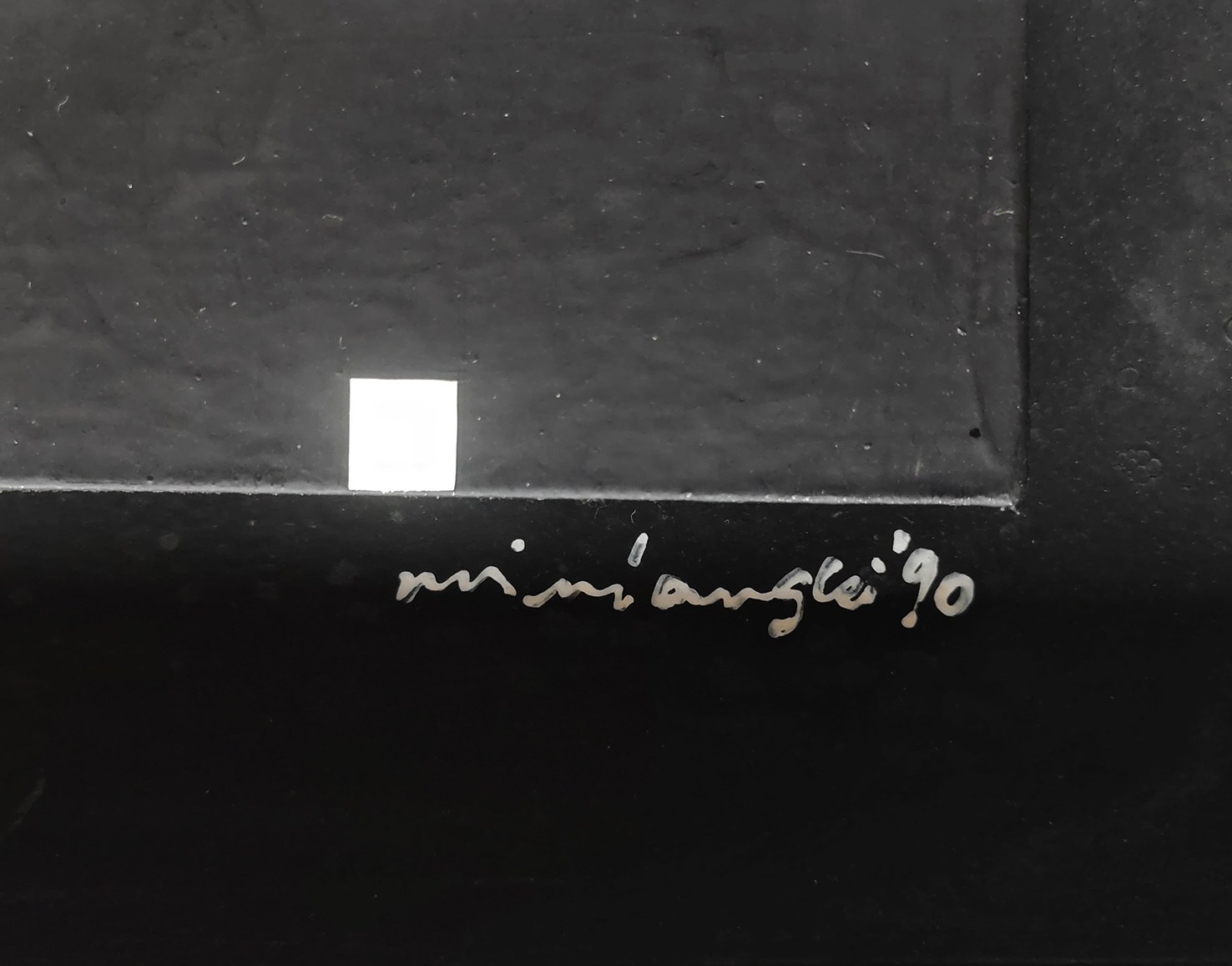
signed and dated lower right: winiarski ’90
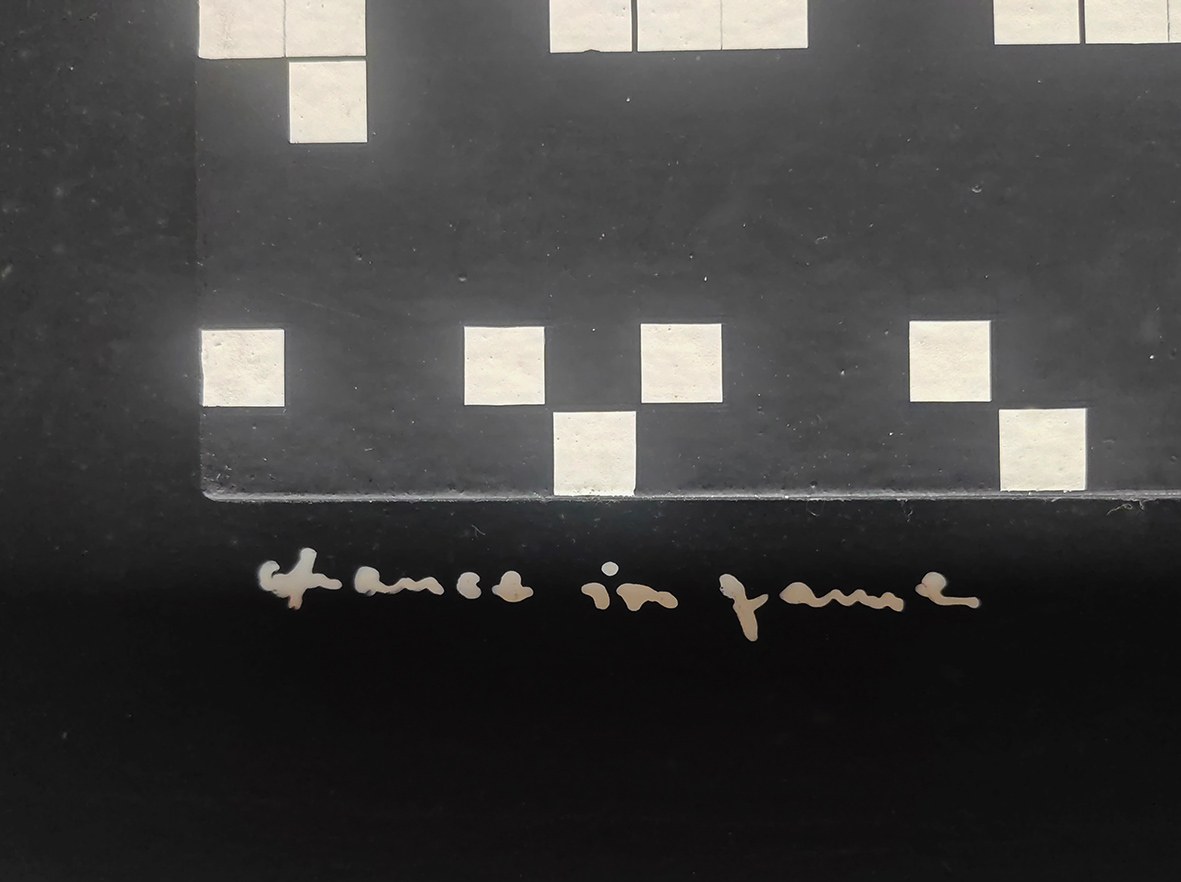
titled lower left: Chance in Game
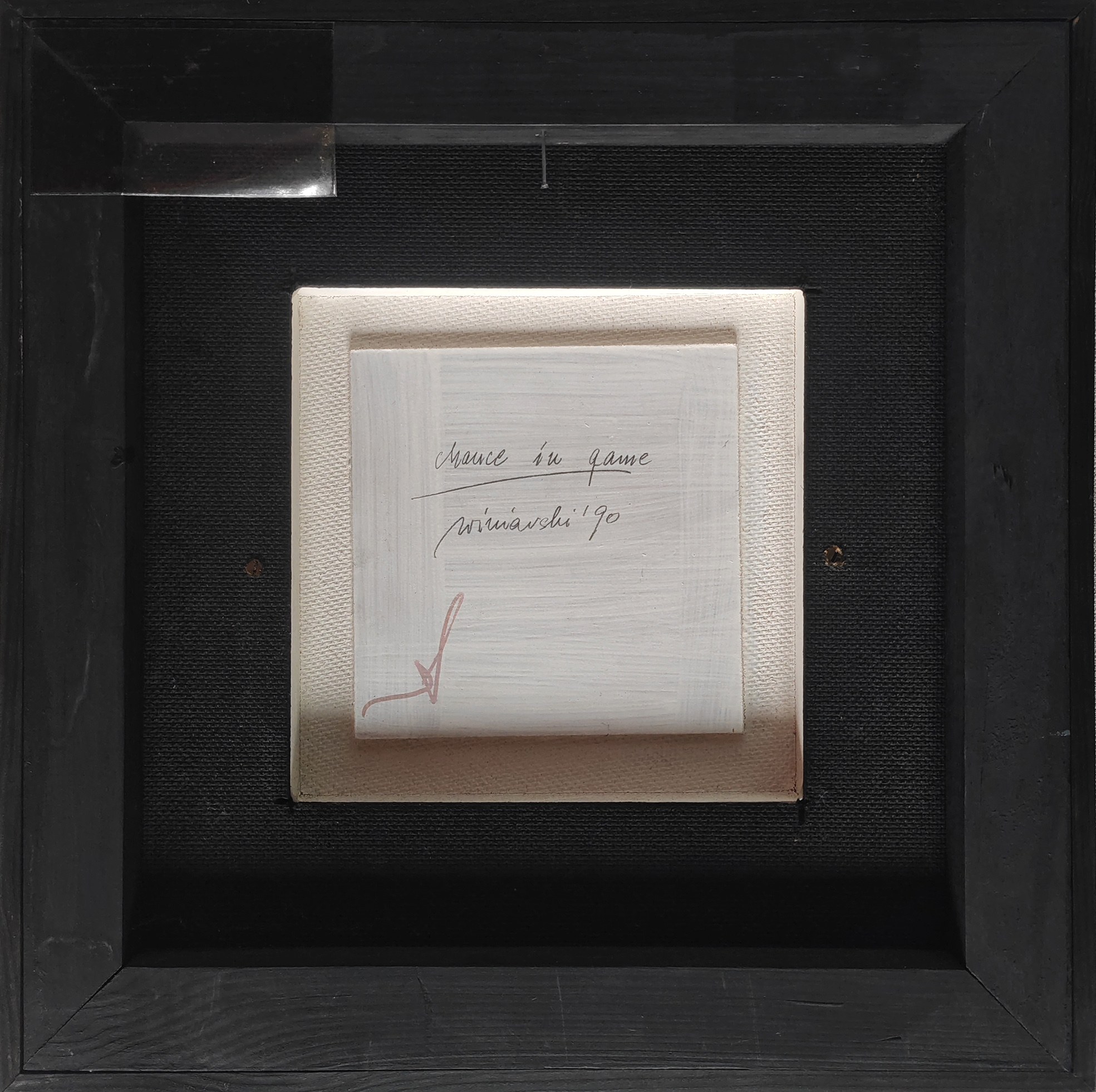
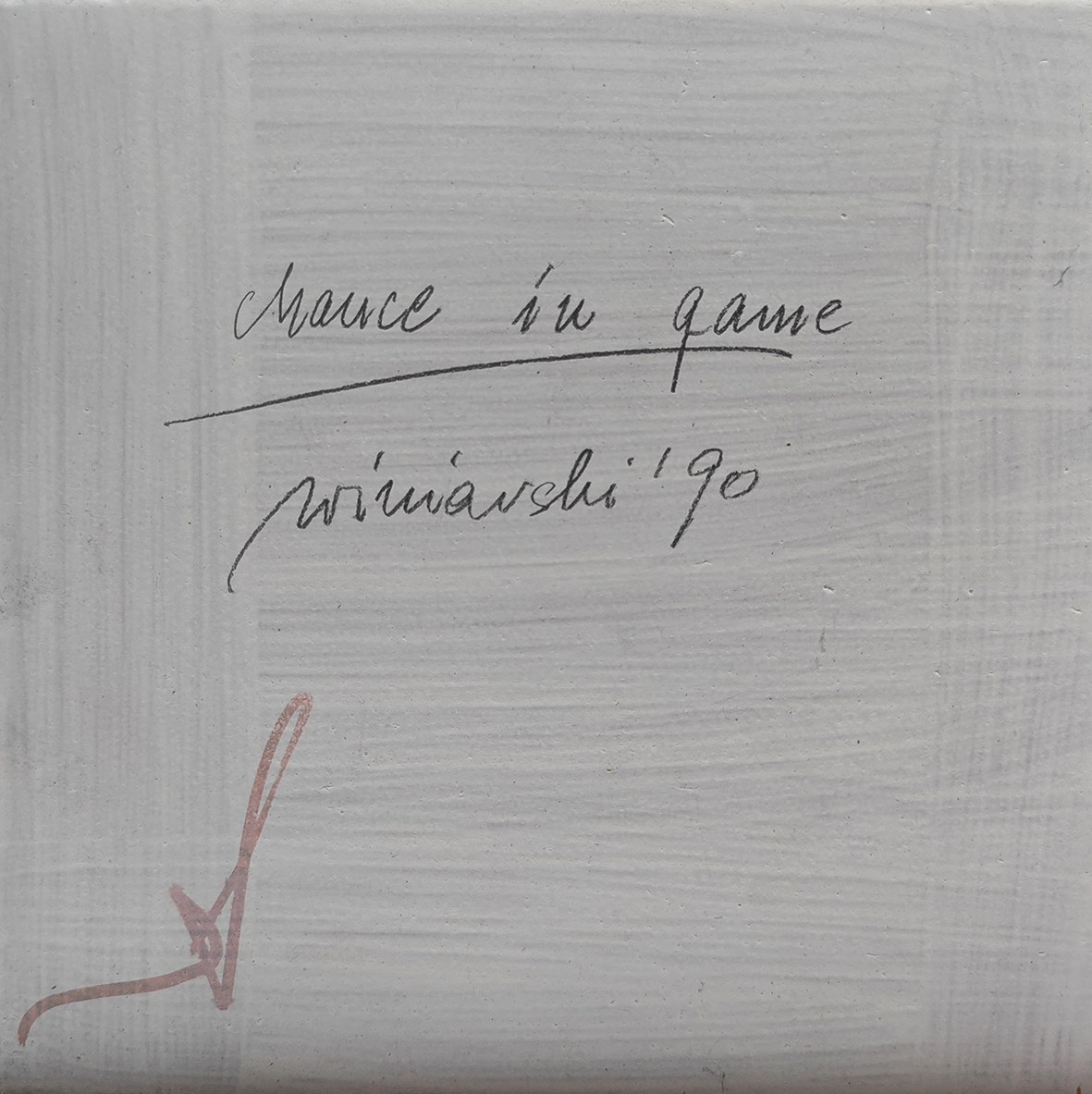
on the reverse, inscribed, signed, and dated again: “Chance in game / winiarski ’90”
probably the artist’s original mounting
Provenance:
private collection, Switzerland—work received directly from the artist;
private collection, Switzerland—acquired from the above;
Ketterer Kunst, Munich, July 19, 2020, lot 120002233;
Hans Braun Collection, Baden-Württemberg — acquired from the above.
The work belongs to an area of exploration characteristic of Ryszard Winiarski, based on the relationship between chance, mathematical rules, and visual order. The composition consists of an arrangement of black and white fields, reminiscent of a game board, a statistical record, or a visual diagram of events. Winiarski consistently moved away from the traditional understanding of the painting in favor of “areas” and systems in which the outcome of the composition was subordinated to procedure, probability theory, and the law of chance.
Particularly noteworthy is the title *Chance in Game*, which directly refers to one of the central concepts in the artist’s work—the game as a model of both chance and order.
Ryszard Winiarski was one of the most important representatives of Polish conceptual and geometric art in the second half of the 20th century. He studied precision mechanics at the Warsaw University of Technology and then painting at the Academy of Fine Arts in Warsaw. Mathematics, statistics, the theory of chance, and the visualization of random processes were of fundamental importance in his work. OneBid emphasizes that the artist created unique “areas” based on constructivism and probability theory, and his works utilized mathematical systems for generating visual forms.
Winiarski consistently developed a language of black-and-white fields, grids, and arrangements, which he treated as a record of events, probabilities, and the rules of the game. In 1995, he received the Jan Cybis Award. His works are held in major museum and private collections, and on the auction market, they rank among the most recognizable examples of Polish conceptual-constructivist art.