


Bencion Zukerman (1890-1944)
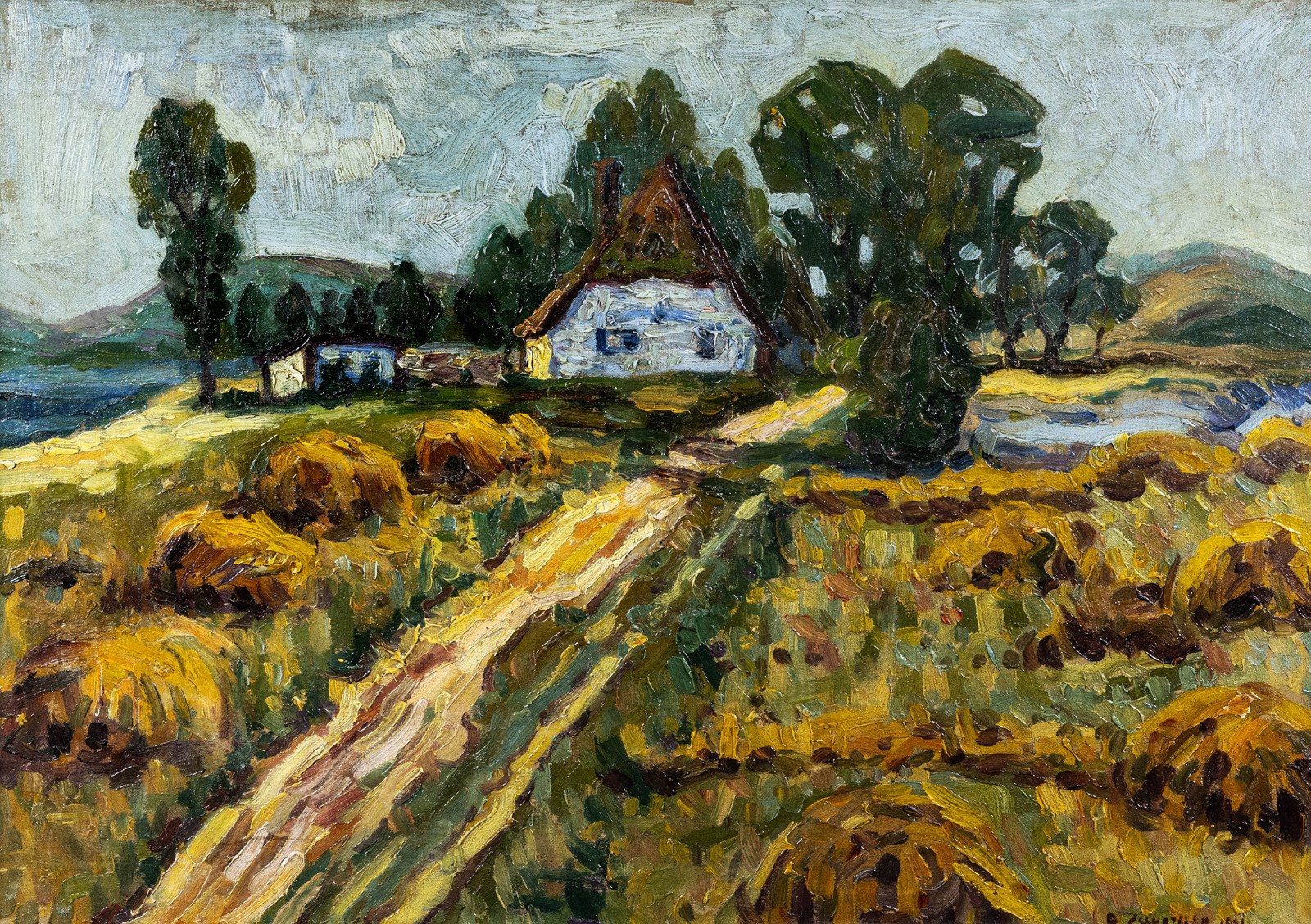
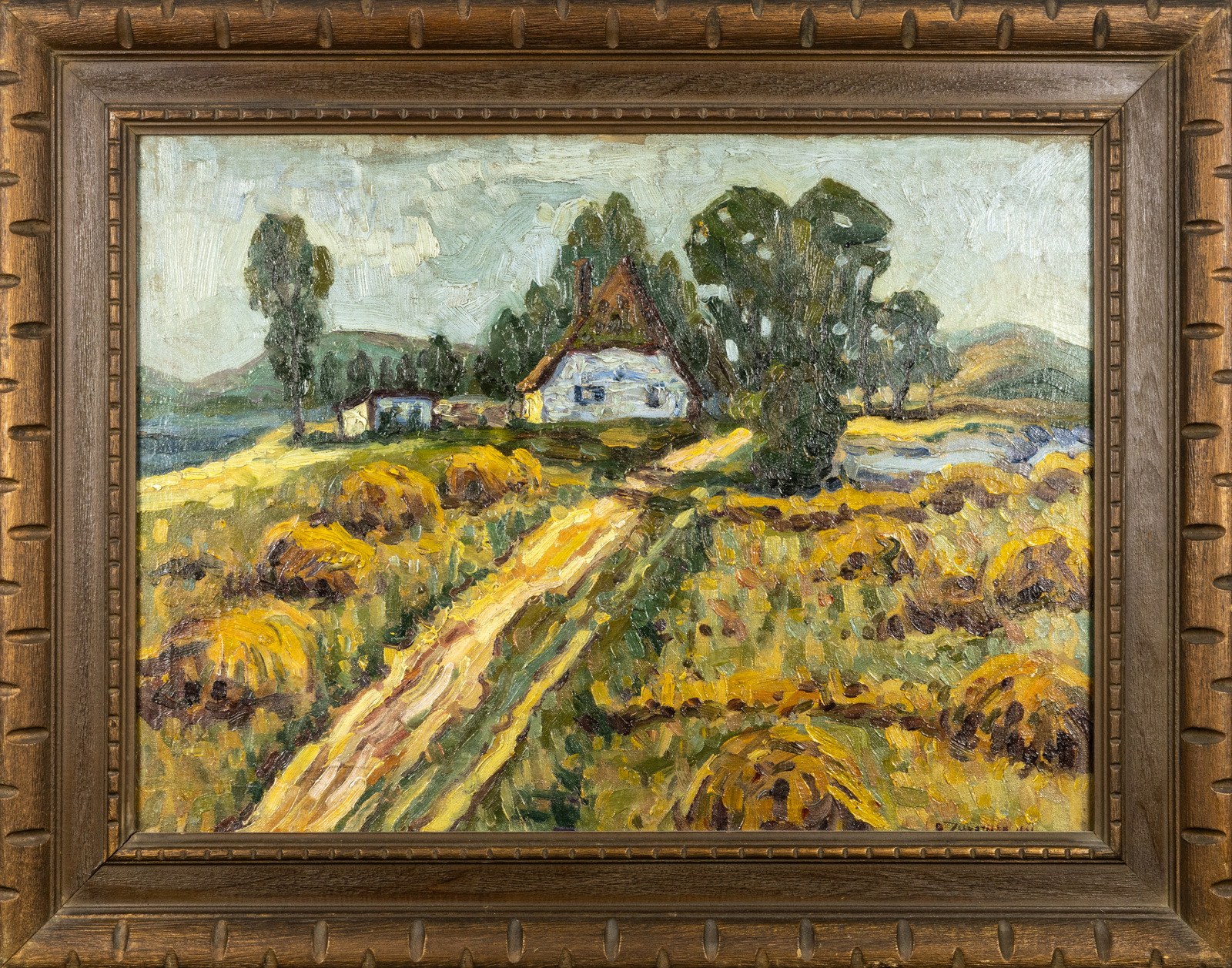
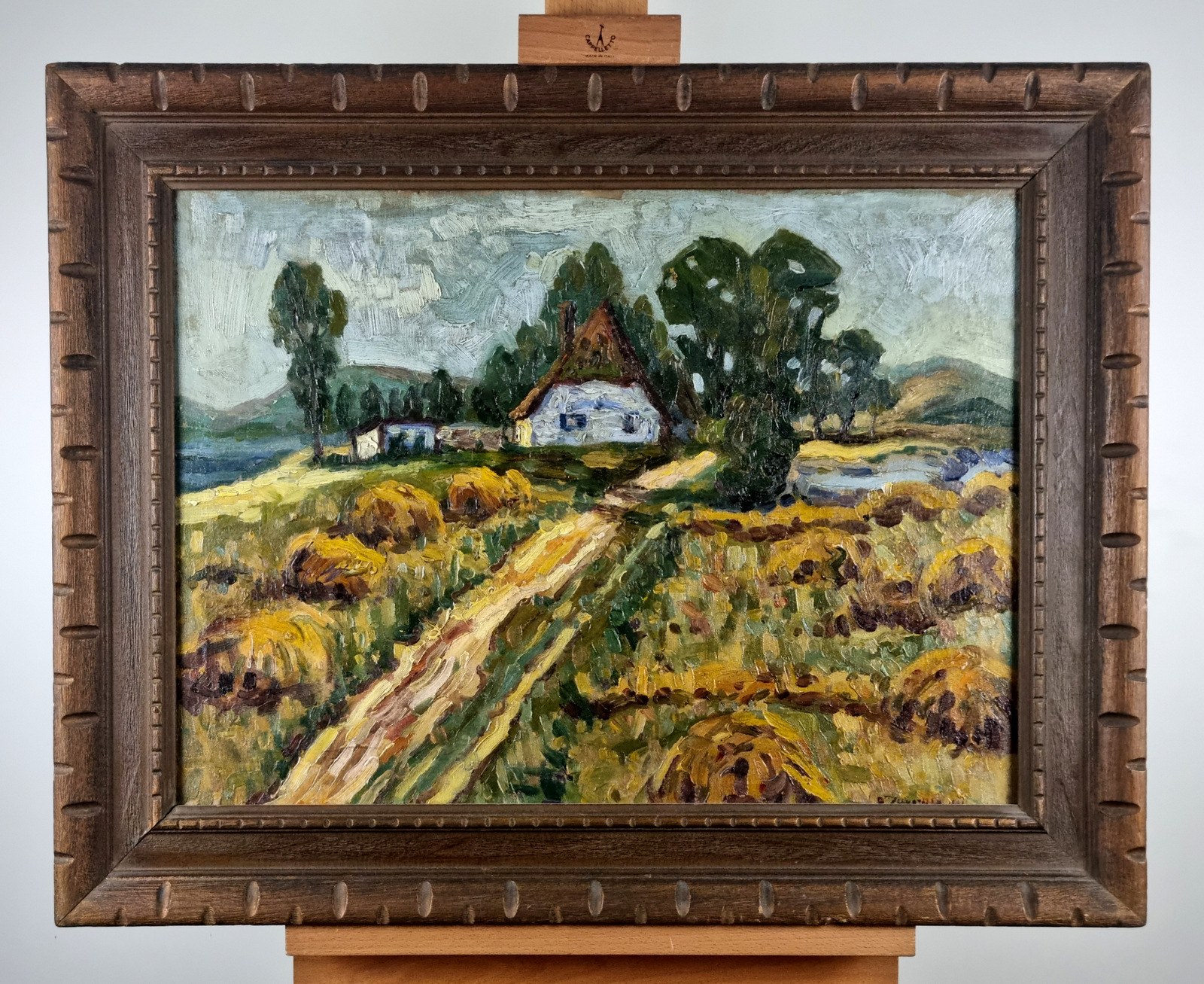
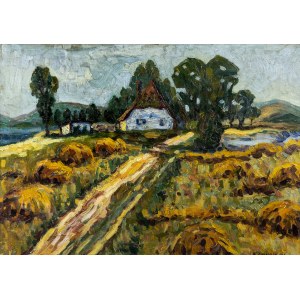
Landscape
1921, drb., al., 48 x 66,5
Signed. AD: B. Zukerman /1921
Bencion Zukerman (1890-1944)
Lithuanian Jewish painter from the small town of Lebedevo (now Belarus). In the interwar period he was considered the most important representative of Lithuanian Jewish art. Encouraged by his parents, the young man initially studied at various yeshivas in Vilnius, but felt a strong inclination towards art. The artist himself later told the story of how he angered the teachers of religiously themed yeshivas who saw that the young student had drawn portraits of them on Talmudic folios (the religious tradition of Judaism forbids the depiction of people). However, this artistic activity was noticed during lectures by the secular professors, who encouraged the young man to enrol in a drawing school in Vilnius. Thus, while still a yeshiva student, Cukerman opened the doors of the Vilnius Drawing School under the guidance of energetic teachers Ivan Trutnev and Ivan Rybakov. When he started attending classes at the drawing school, Cukerman realised that his inclination towards art was stronger than his religious studies at the yeshiva.
At the Vilnius Drawing School, the young artist met other Jewish pupils, Chaim Sutin, Pink Kremen and Michel Kikoin, who later formed the nucleus of the so-called "Paris School". Cukerman seems to have had a particularly close relationship with Ch. Sutin. Already while living in Paris between the wars, Cukerman painted Ch. Sutin's portrait. This is important because the portrait is a particularly rare genre in Cukerman's work. He painted only those people with whom he had a special connection. On the other hand, Ch. Sutin was one of those people who posed only for close friends, such as Amedeo Modigliani.
Interestingly, the artist's first patrons, while he was still studying in Vilnius, were the local Polish landlords, who materially encouraged him to continue his artistic studies, rather than the Jewish merchants from whom a talented Jewish youth might have expected to support him in the development of his talent. Although the difficult living conditions of budding Jewish artists are well described and known from the life of the Paris Hive (artists' colony), it was also difficult to make a living in Vilnius if the support of relatives was insufficient. As a result, Ch. Sutin and other Jewish youths earned extra money in the atelier by helping to retouch photographs. The material support helped Cukerman to successfully graduate from the Vilnius Drawing School, and a special mark of honour was the joint exhibition of art works by Cukerman and the drawing school's teachers, I. Trutnev and I. Rybakov. This was a significant recognition of the young artist and a great start for his further professional career.
After graduating from the Vilnius Drawing School, Cukerman received support from Boris Goldberg, a supporter of Zionism, to study in Paris. The latter also arranged for Cukerman to be recommended to Leopold Bernstein-Sinaev, a well-known Jewish sculptor living in Paris. The young artist enjoyed particularly good conditions for his work in the then capital of world art. Here, he attended the Cormon painting studio, where he had complete creative freedom. The first exhibitions of his work were soon held. In Paris, the young Cukerman's work was highly appreciated, with a large collection of the artist's works being acquired by the renowned art collector Baron Rothschild.
While working in Paris, the artist also sent his works to Vilnius, maintaining contact with the Vilnius Art Society. Among the most significant fruits of this collaboration was the painting of 28 December 1914. Mavroso namuose Šv. The exhibition of avant-garde paintings was held at Mavrosa's premises at 11 St George's Avenue (now 9 Gedimino Avenue). The Munich-based German Expressionists Mariana Veriovkina and Alexei von Yavlensky exhibited their works, and the Paris-based B. Zuckerman (who had the largest number of works in the exhibition) also presented his work. This exhibition was the first attempt to present the latest developments in Expressionist art to the conservative Vilnius public. It became an important recognition for the young Jewish artist working in Paris.
During the First World War, Cukerman went to Russia, where Jewish avant-garde art was concentrated at the time. In St Petersburg, Cukerman lived in the neighbourhood of Mark Shagal. In Russia, Cukerman was entrusted with the special task of illustrating an album of Jewish folk art by Simon Ansky. This commission was not accidental - Cukerman was chosen as the artist best suited for the task. The reviewer of Cukerman's exhibition in Kaunas in 1920, A. Jakštas, who described the artist as a true artist, also testified to his talent in graphic art, assessing his "lettering". The artist also received exceptional recognition in 1919 in Vilnius, when he held an exhibition of his works. The local newspaper Vilner tog featured Cukerman as a well-known artist and announced his arrival in the city in a separate report.
The next major phase of Cukerman's work began in Palestine. In 1923, the artist travelled to Jerusalem, where, together with other Jewish artists, he laid the foundations for professional modern Jewish art in Israel. The work of this period is unique, as one art critic described it - a painterly epic by Zuckerman. Zuckerman's oriental landscapes were welcomed on his return and exhibitions in Europe.
After a very productive period in Palestine, the artist returned to Poland and held solo exhibitions in Warsaw, Krakow, Lviv and Vilnius. He and his family settled in Vilnius, the city where he began his art studies. In the Polish cultural press, he was hailed as the most important Jewish artist of interwar Vilnius. Unfortunately, World War II not only physically destroyed Cukerman's rich artistic legacy and the collectors who collected interwar Jewish art, but also erased people's memory of the famous artist.
Today, Cukerman's work is slowly making a comeback in the context of Lithuanian, European and Israeli art. As the artist himself said, Jewish art should convey optimism. The presentation of the artist's work and biography should make art collectors and art lovers feel optimistic. An internationally acclaimed artist, whose place in the history of Lithuanian art and Jewish art is among the most important Litvak artists in the history of Lithuanian art and Jewish art, such as M. Shagal, Ch. Sutin, M. Kikoinas and P. Kremenis.
BIBLIOGRAPHY:
Laučkaitė L., Vilnius Art at the Beginning of the 20th Century, 2002.
Laučkaitė L., Vilnius Art during the Great War, Vilnius, 2018.
Širkaitė J., Vilnius Drawing School, Vilnius, 2018.
Malinowski J., Malarstwo i rzeźba Żydów Polskich w XIX i XX wieków (Painting and Sculpture of Polish Jews in the 19th and 20th centuries), Warsaw, 2000.
Bencjon Cukierman's paintings // Nowy Dziennik, 1933, No. 281, Kraków.
Ben Zion Zuckerman // Nowy Dziennik, 1933, No. 269, Kraków.
Sources from the family archive.











Vizualizate recent
Loghează-te pentru vedea lista loturilor
Preferate
Loghează-te pentru vedea lista loturilor