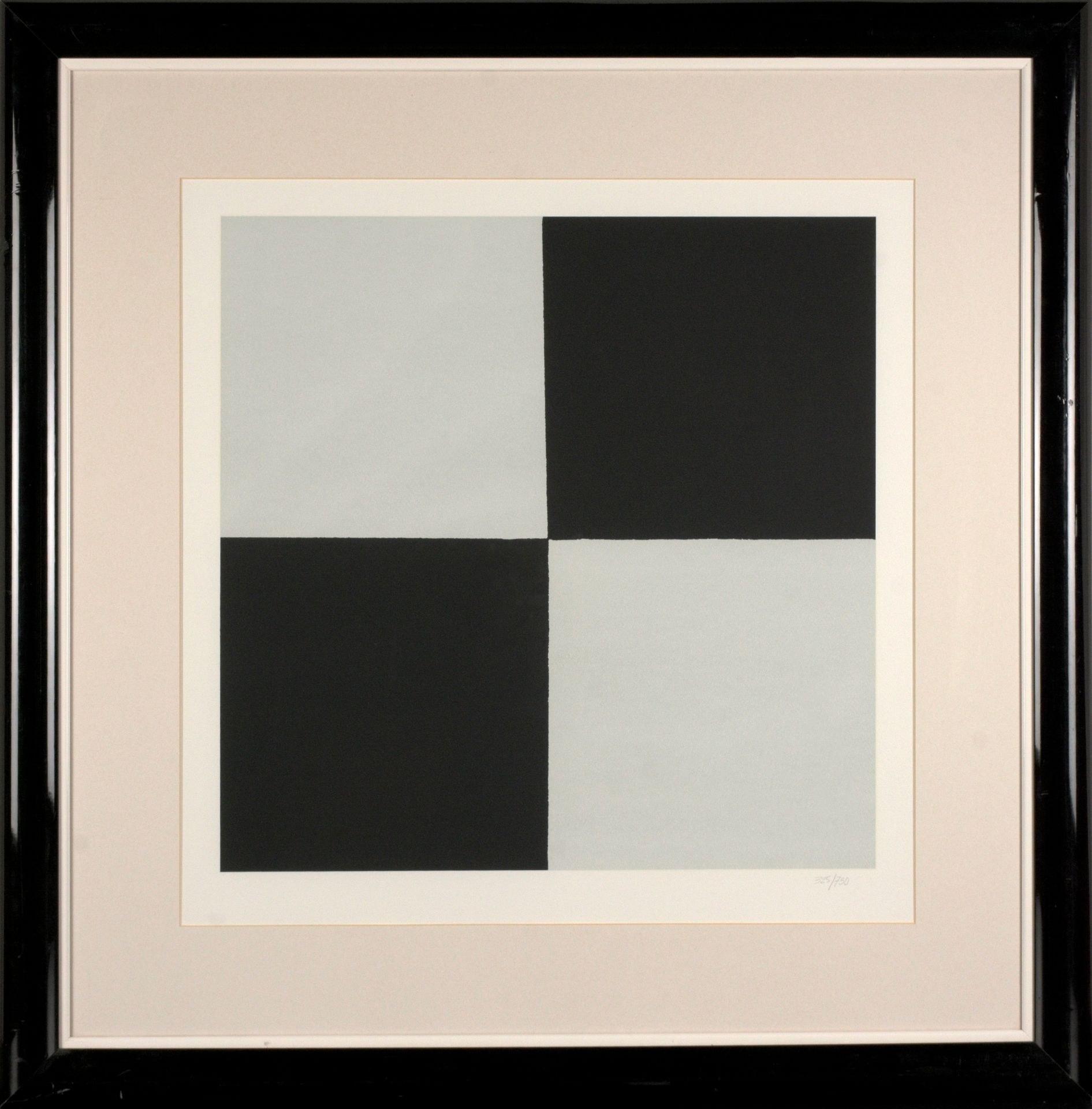
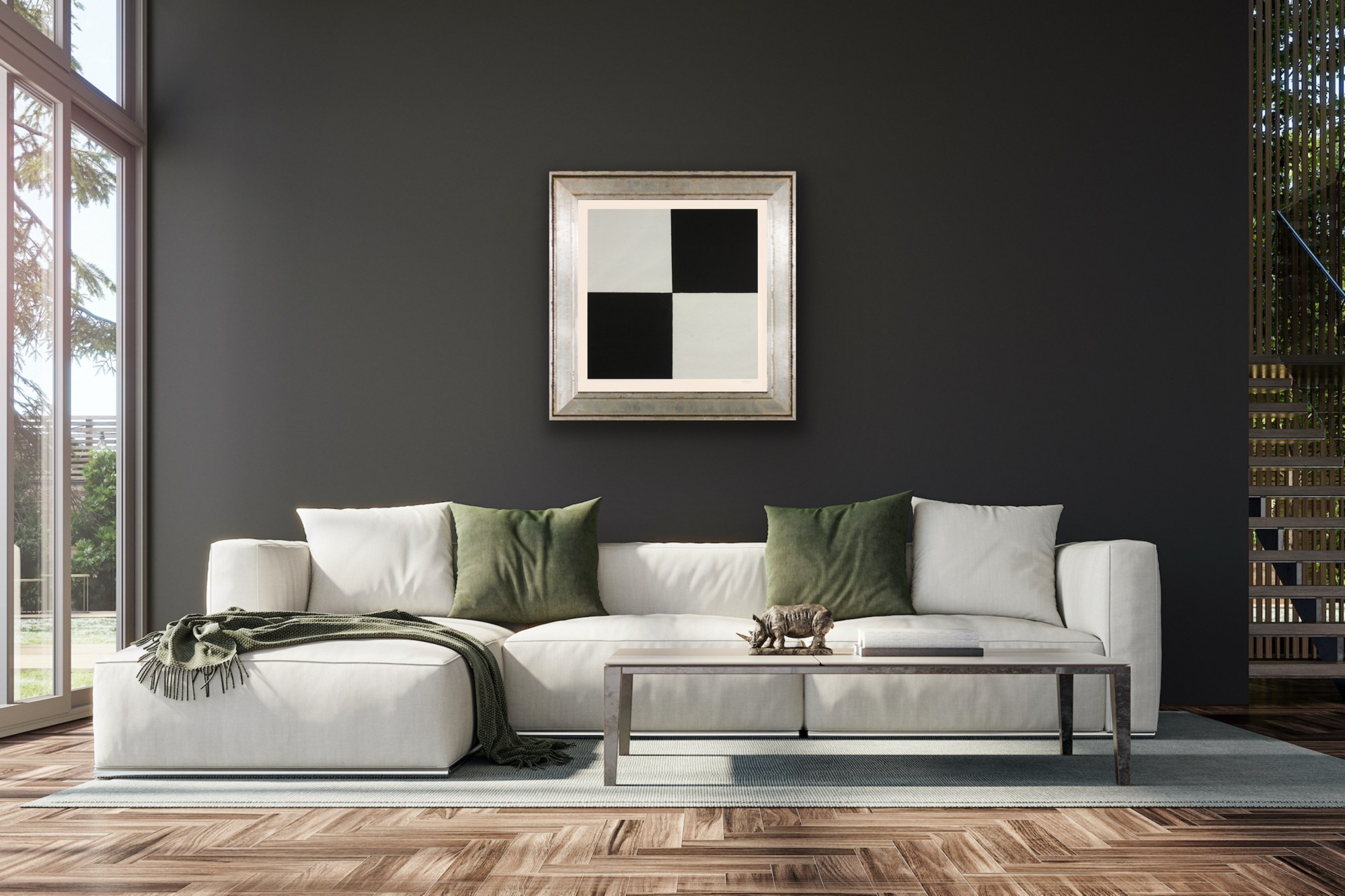
Serigraphy, paper 60 x 60 cm in light passe - partout; in double black and white frame 90 x 90 cm'; edition 325/750.
Publisher: Acte III Editions (Belgium)
Acte III is famous for publishing works by the great masters of modernism and contemporary art. They have collaborated with foundations and heirs of the artists to create limited edition prints, for Auction Houses around the world.
The composition is based on one of the most radical trends in 20th century art - suprematism, whose creator was Kazimir Malevich. It depicts a chessboard layout consisting of two black and two white (or light gray) squares. It is a development of the ideas contained in the artist's most famous work, "Black Square on White Background."
Malevich He is considered one of the most important pioneers of abstractionism.
Malevich strived for a "pure feeling" in art, rejecting the representation of objects from the real world. For him, the square was "the germ of all possibilities."
Malevich came from a Polish Catholic noble family residing in Russia. Malevich always declared his Polish origin and nationality. He was initially influenced by Paul Cézanne, the Russian Post-Impressionists, Fauvism, Expressionism and Cubism. In 1915, in St. Petersburg, he announced a program of suprematism, the most radical direction of abstractionism. He rejected the iconography of representational art, recognizing the straight line and the square, found nowhere in nature, as symbols of man's supremacy over chaos. In June 1915 Malevich painted a picture featuring a single painting object - a black square - on a white background.
Malevich called this type of art non-objective and referred to the system of pure color supremacy he invented as suprematism. The first exhibition of suprematist works took place in St. Petersburg, in December 1915, and was held as part of the last Futurist exhibition.
The painting was part of the legendary "0.10" exhibition in Petrograd (1915), where Malevich first presented suprematism to the world.