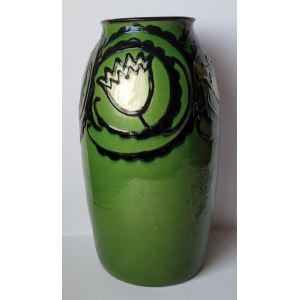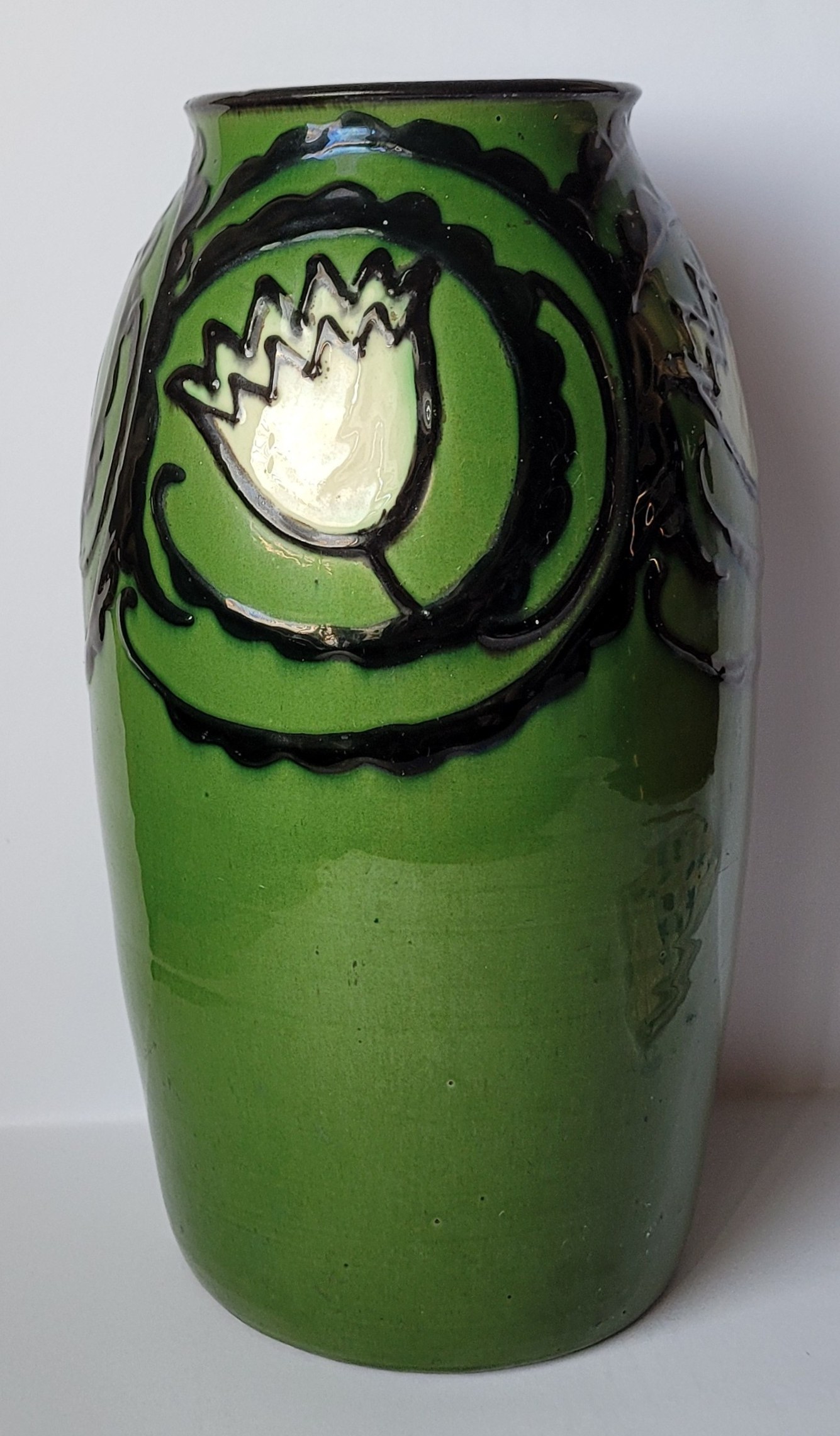
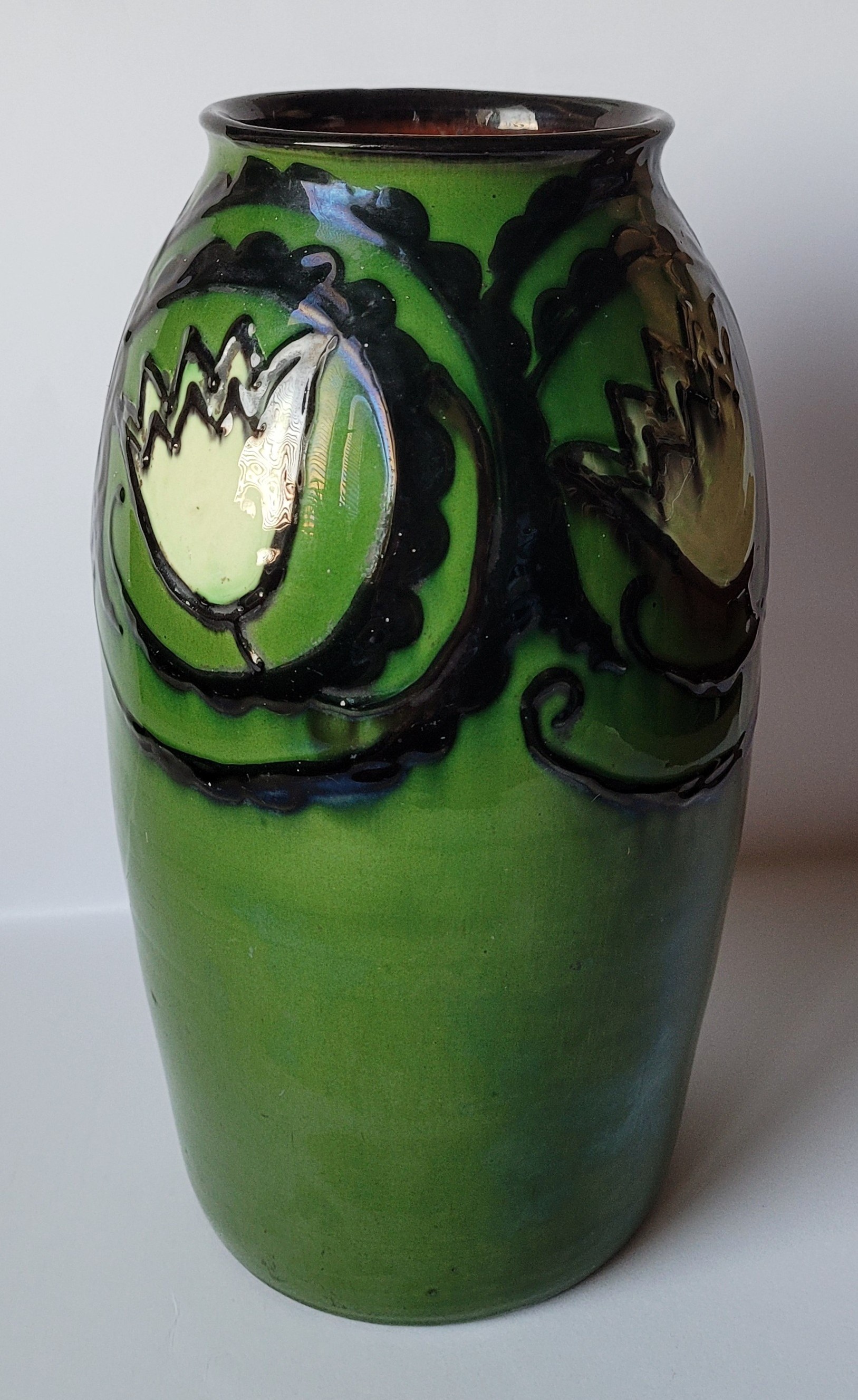
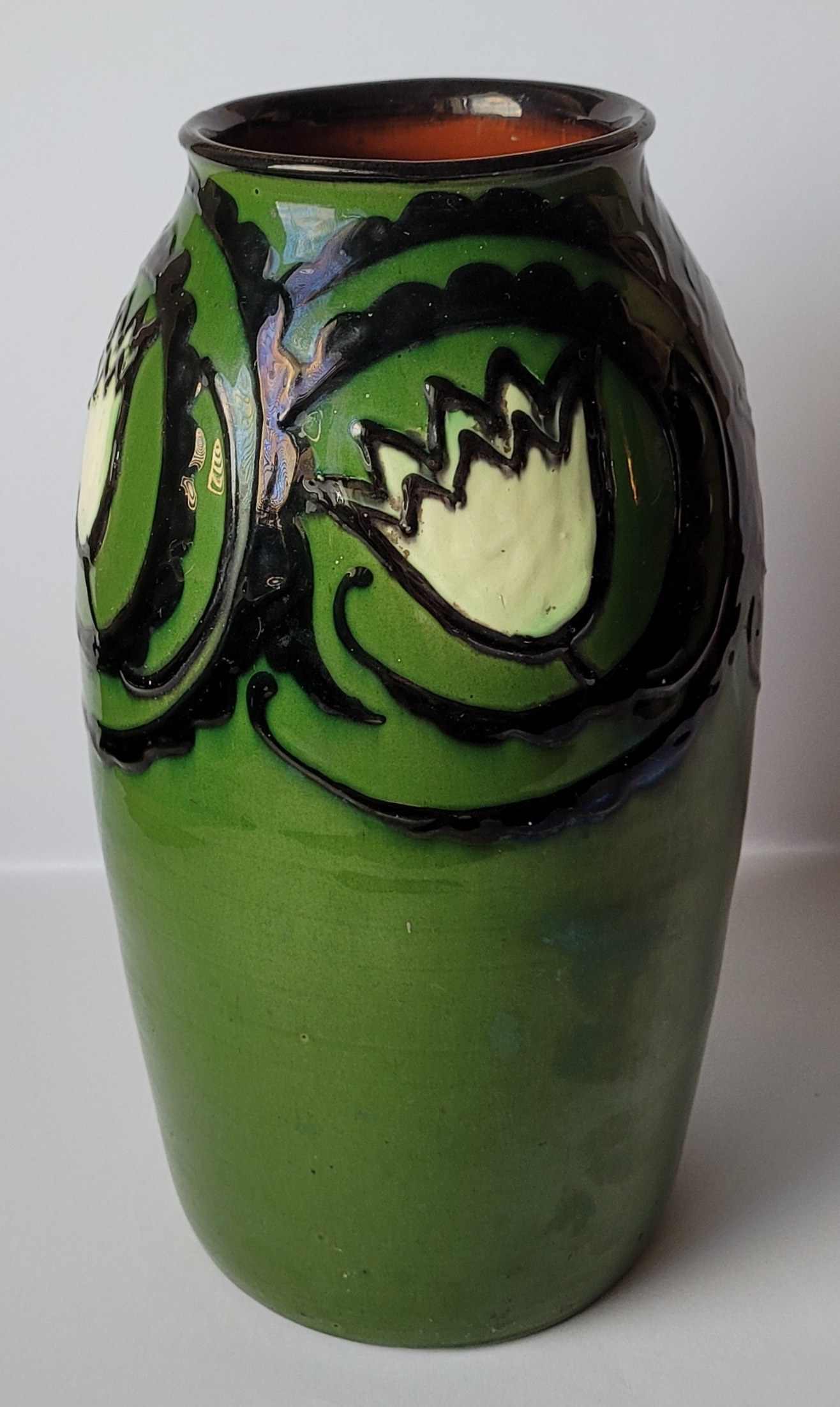
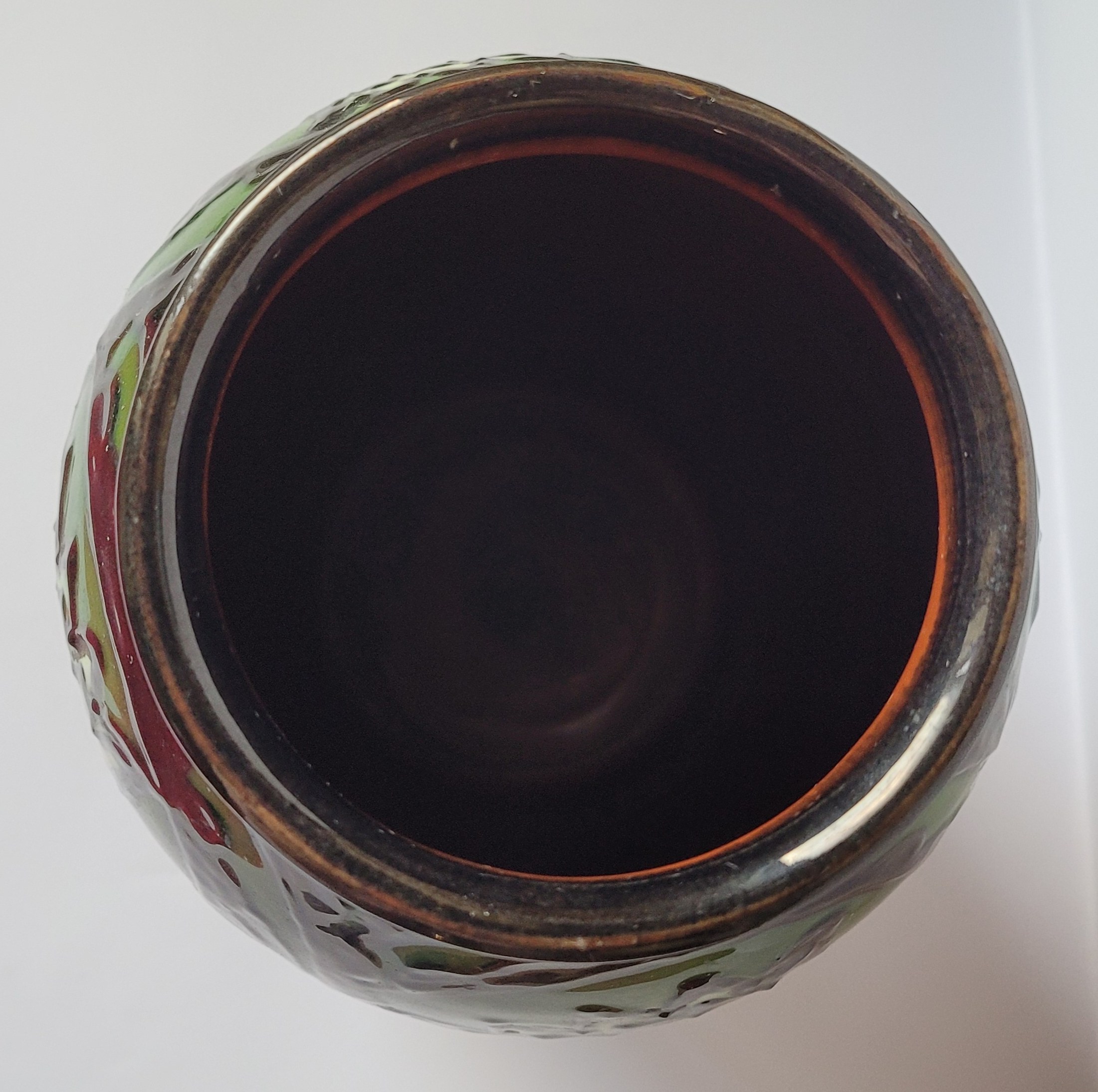
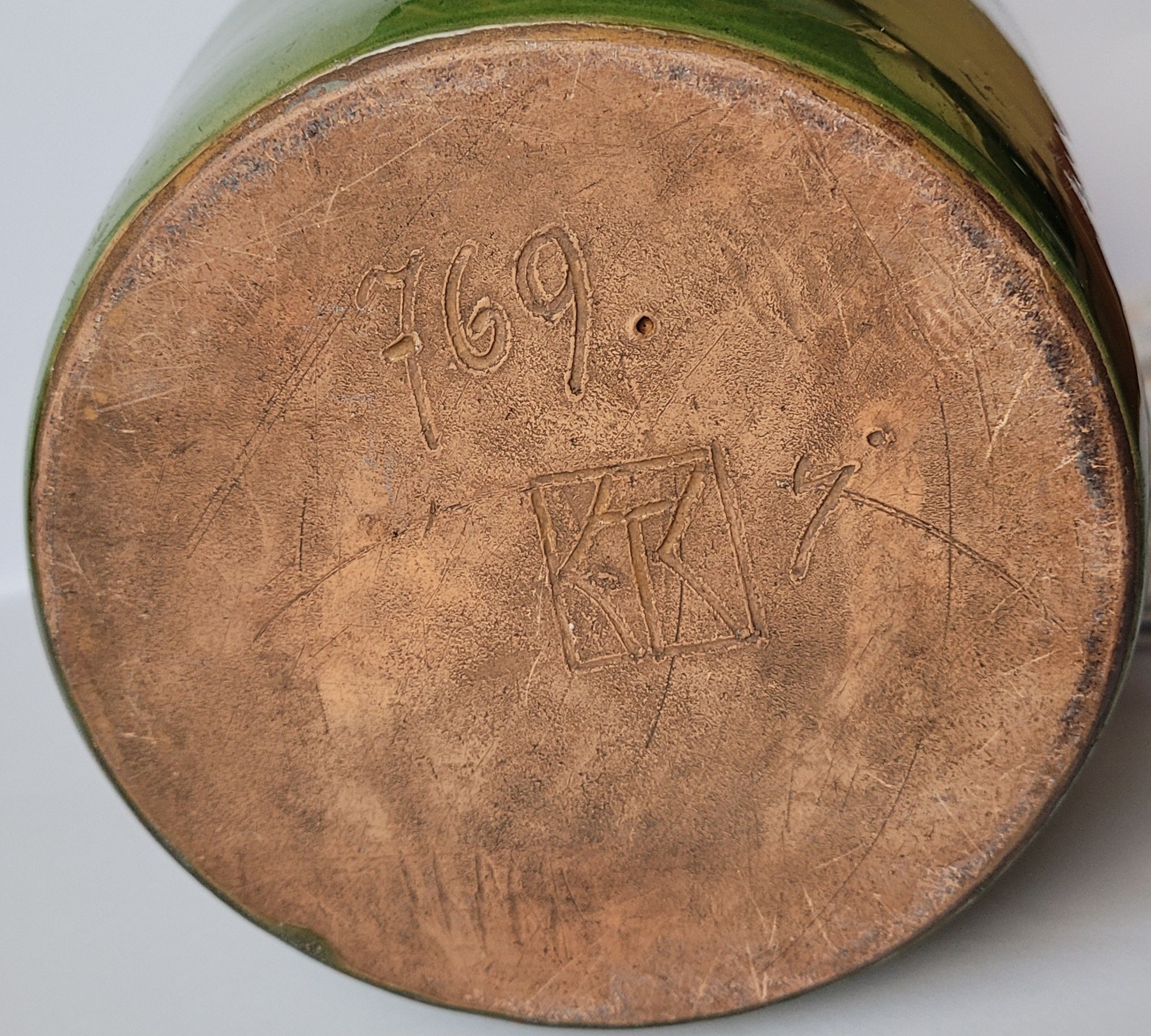
Red clay, enamel, decoration decorated with decorative flowers (tulips), signature on the bottom: trademark in square with tied monogram KTK and engraved numbers 769. Dimensions (approx.): height 30.5 cm, base diameter 13.5 cm, filler 10.7 cm.
Designed by Josef Maximilian "Max" Laeuger - German architect, designer and ceramicist, one of the most important representatives of the German Art Nouveau scene, co-founder of Deutscher Werkbund in 1907, bronze medalist at the 1928 Olympic Competition for Art and Literature. From 1881 to 1884, he studied painting and interior design at the Akademie der Bildenden Künste (School of Decorative Arts) in Karlsruhe, was a lecturer there for several more years, and from 1894 to 1933 worked at Karlsruhe Technical University as a professor of drawing and interior decoration. From 1897 to 1914 he headed a pottery workshop in Kandern, where his numerous works (including vases, jugs and ceramic bas-reliefs) were created and became very popular with the public. In 1900 and 1904, the artist received gold medals at the World Expositions in Paris and Saint Louis. In 1916, he established his own ceramic workshop: Staatlichen Majolika Manufaktur de Karlsruhe. The decoration of his works was mainly characterized by rustic motifs in the form of colorful decorative flowers and leaves, covered with a layer of enamel; he also used the technique of decorating barbotine ceramics.
Conservation condition: very good, natural traces of use according to the age of the object.
Literature:
Art Nouveau ceramics from the collection of Pawel Banaś, Marek Kieszkowski and Andrzej Ryszkiewicz: exhibition catalog. Gdansk 1989
Secession: collections and exhibitions of the Mazovian Museum in Plock. Plock 2017
Imelda Franzke - Jugendstil.Augsburg 1995
Gabriele Fahr-Becker - Secession. Königswinter 2004