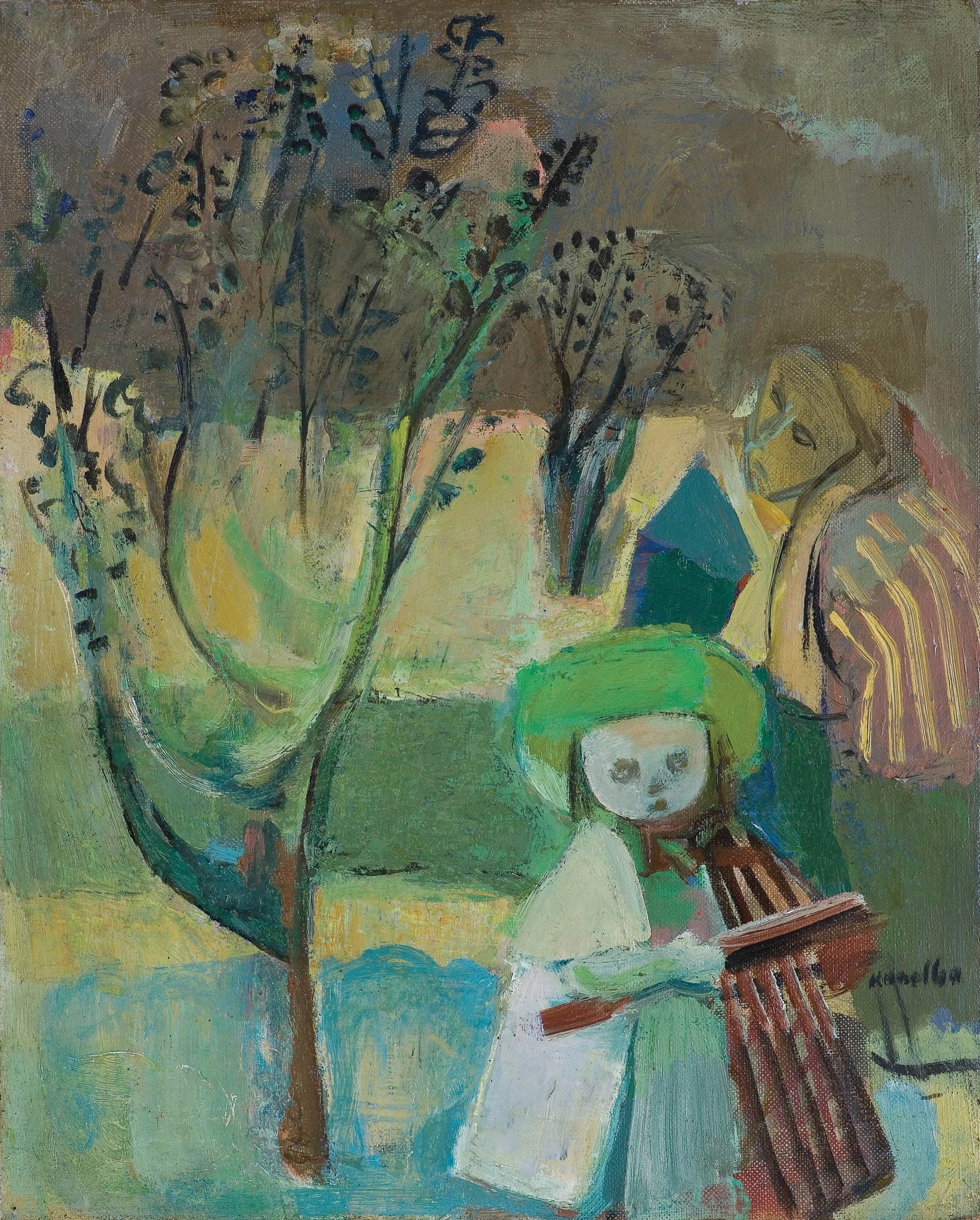
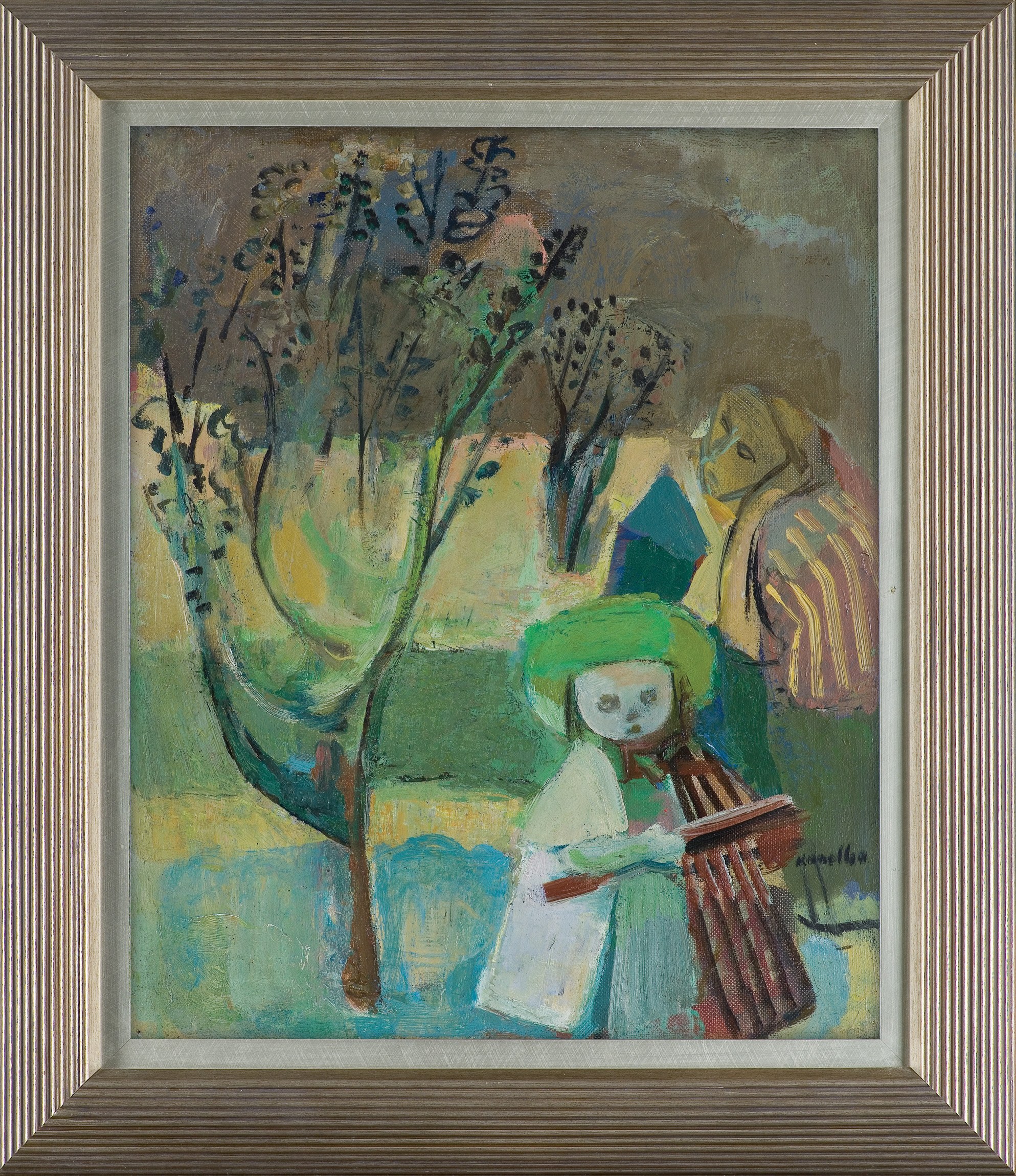
49.50 x 39.80 cm - oil, canvas pasted on fiberboard
Signed on the right: Kanelba
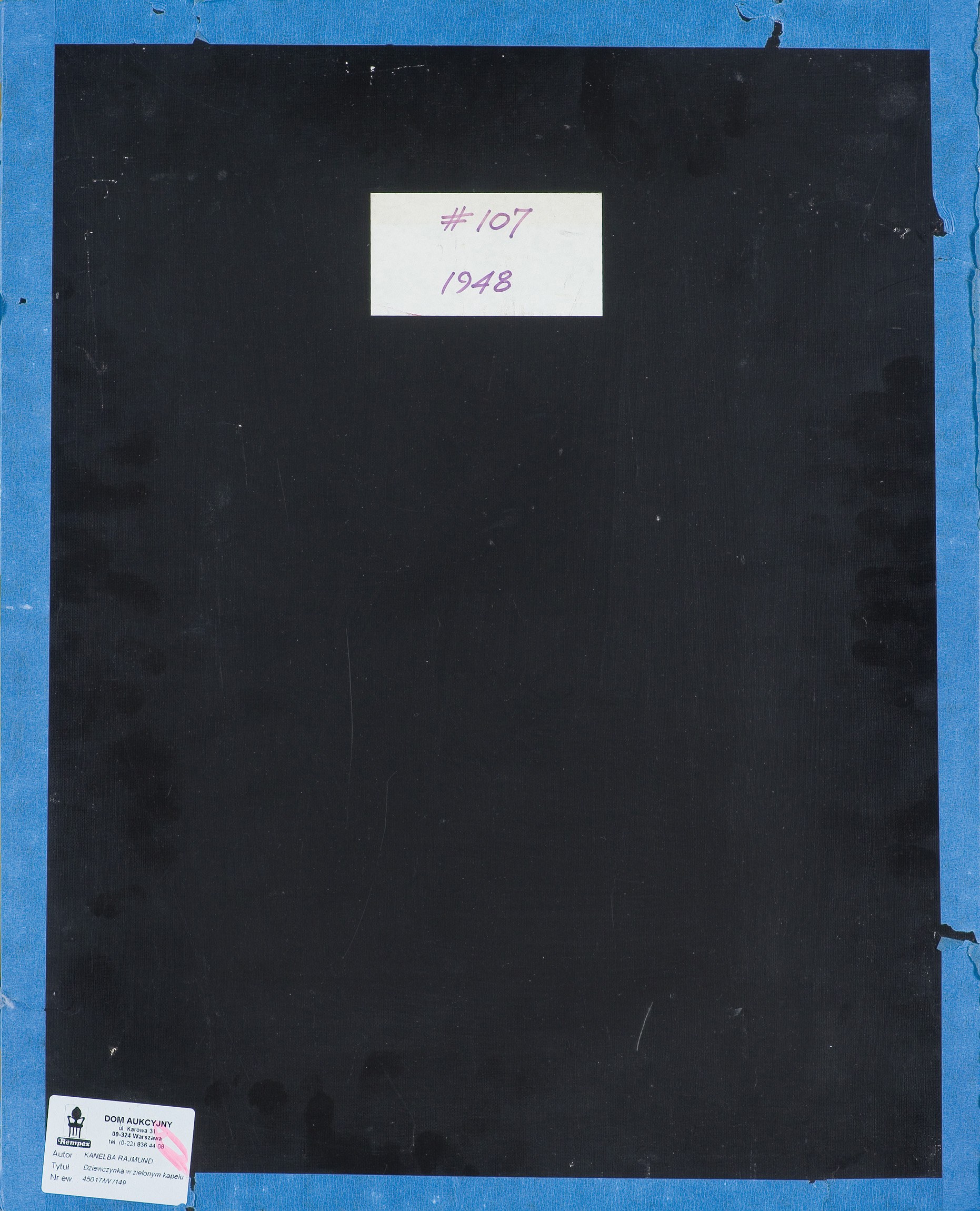
On the back, centrally, an inventory sticker with the number (in marker): #107 | 1948; l.d. sticker of an auction house in Warsaw.
- The Collection of Urszula and Piotr Hofman, edited by Urszula Hofman, Warsaw 2013, p. 32;
- Szymon Mondzain and the École de Paris. Polish avant-garde painting of the second half of the 20th century. Collection of Ursula and Piotr Hofman, Abbotsford Palace - Department of Modern Art of the National Museum in Gdansk 21 II 2015 - 22 IV 2015;
- The Collection of Urszula and Piotr Hofman, edited by Urszula Hofman, Warsaw 2018, p. 30.
Under items 52 to 68, we present to you carefully selected works of artists from the École de Paris circle, which are part of the collection of Ursula and Piotr Hofman. The family collection is subject to constant development, expansion and reconstruction aimed at seeking new directions. It is the result of an evolving way of perceiving, understanding and learning about art.
Ursula and Piotr Hofman's collection grows out of their fascination with the paintings of Polish-Jewish artists associated with the pre-war creative community in Paris. It was the activities of the Parisian artistic émigrés - centered around Montparnasse and co-creating one of the most important phenomena in the art of the first half of the 20th century - that became the foundation of their collection.
The first painting purchased, which gave the impetus and started the adventure and passion of interacting with art, was one of Simon Mondzain's canvases. A painter who combines the geometrizing construction of form with the sensibility of Krakow modernism. His still lifes, landscapes and portraits show a fascination with Cézanne and the tradition of French Post-Impressionism. Mondzain still holds a prominent place in the entire collection of works by artists such as Eugeniusz Eibisch, Rajmund Kanelba, Henryk Epstein, Henryk Hayden, Maurice Blond, Dora Kucembianka, Alexander Blonder, Henryk Berlewi, Zdzislaw Cyankiewicz, Zygmunt Landau, Jean Peské and Joachim Weingart, presented next.
Of interest are two canvases by Dora Kucembianka, an artist who for many years remained in the shadows and rarely appeared on the auction market. Her paintings show inspiration from Post-Impressionism, Colorism and an interest in a synthetic approach to form. She painted primarily portraits, still lifes and landscapes - subjects characteristic of École de Paris artists - focusing on compositional harmony and subtle color relationships. Her paintings are characterized by balanced construction, softness of modeling and moodiness, which gives the representations a lyrical character. Today we have the opportunity to present her work to a wider audience and rediscover the silhouette of this interesting painter.
All the presented canvases from the collection of Ursula and Piotr Hofman, carefully selected from an artistic and historical point of view, become an opportunity to spread knowledge of the artistic milieu that made Paris the world capital of the avant-garde in the early 20th century. They develop a sensitivity to the paintings of the École de Paris, which shaped the modern view of color, form and emotion in art.
Each of the paintings on offer is not only an artistic work, but also a testimony to an extraordinary time and place where diverse cultures, ideas and creative personalities met. Mr. and Mrs. Hofman invite you to co-create this history and join them in their mission to keep alive the memory of the unique phenomenon that was École de Paris painting.
Rajmund Kanelba /Kanelbaum (Warsaw 1897 - London 1960)- began his painting studies in 1918 at the Warsaw School of Fine Arts under Stanislaw Lentz and Tadeusz Pruszkowski.
He then studied in Vienna and Paris, where he settled permanently from 1926, joining the circle of artists of the so-called École de Paris. Starting in 1924, he exhibited a lot at home and abroad, taking part in the Paris Salons and presenting his works in London, Edinburgh, Glasgow, Berlin, Bordeaux, Brussels, New York, Chicago, Philadelphia, Florida, among others. During World War II he stayed mainly in England, later living periodically in Paris, London and New York. He painted landscapes, still lifes, nudes and portraits, including, especially characteristic for him, "lyrical in mood, freely and sketchily treated studies of women and children" (SAP). In the 1950s he portrayed, among others, Britain's Queen Elizabeth II.