


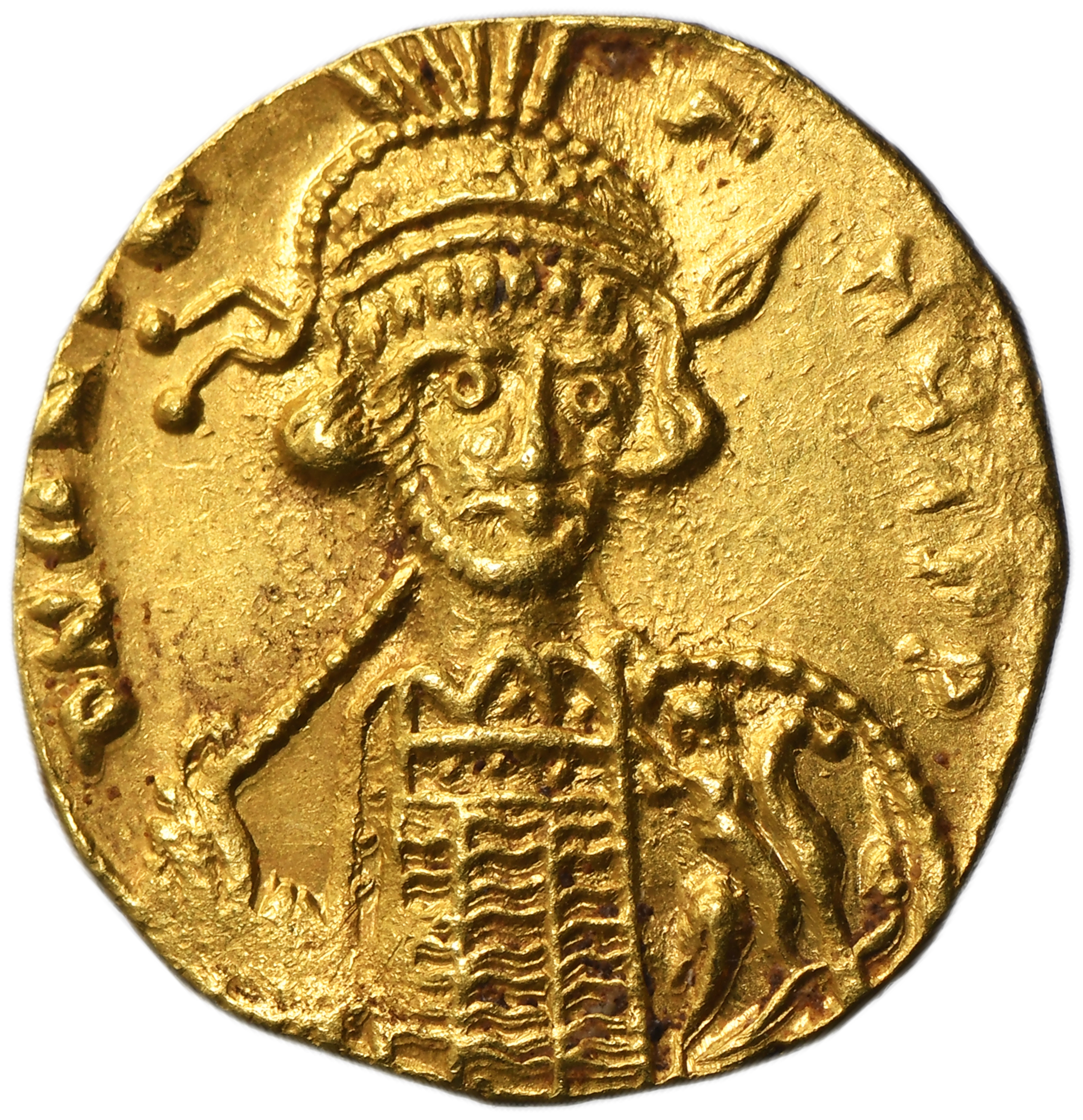
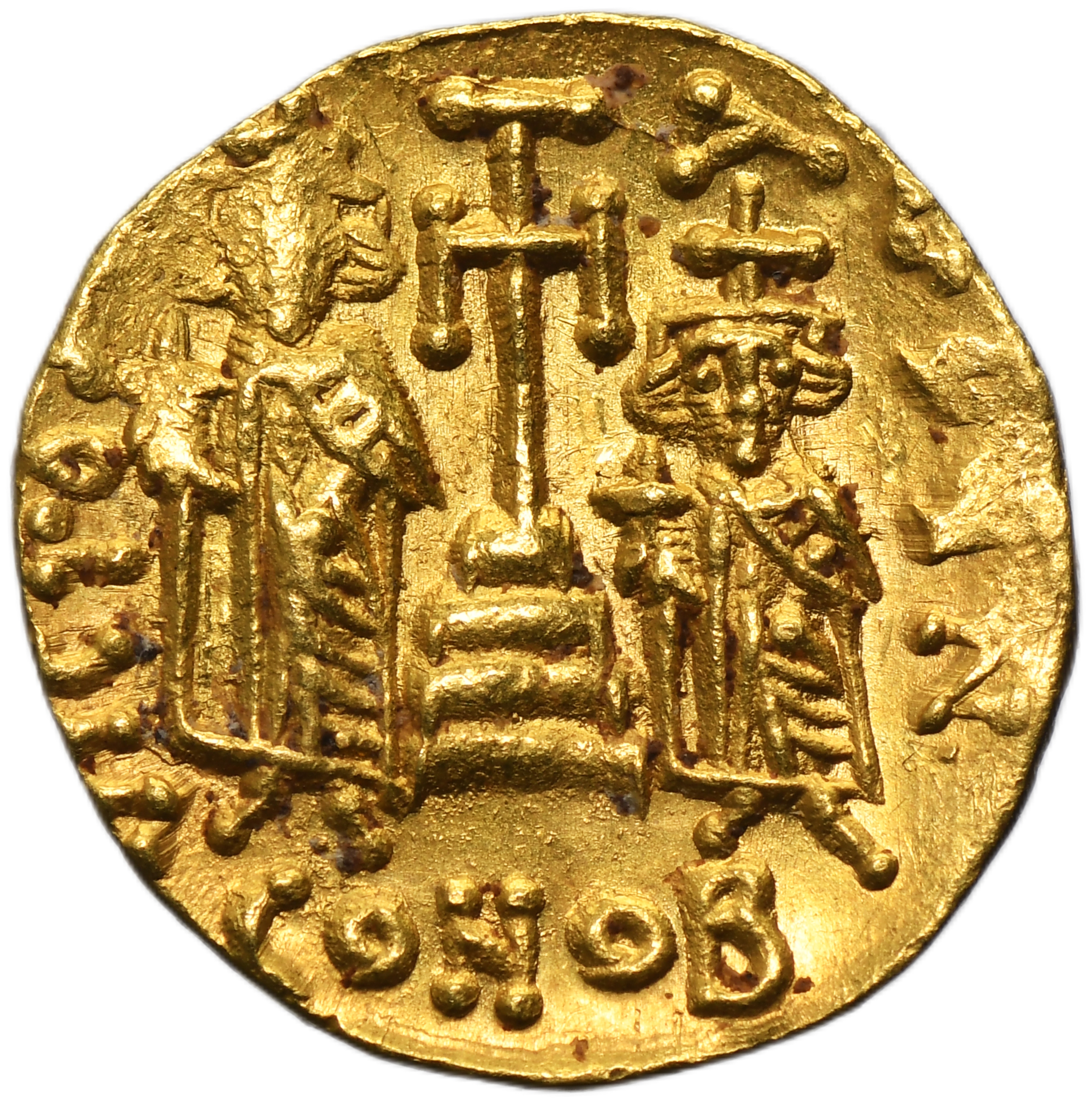
Gold solidus of Constantine IV Pogonatus (AD 668–685), struck at the mint of Constantinople between AD 674 and 681, belonging to issues from a period marked by conflicts with the Arabs and the consolidation of Heraclian dynastic rule. These coins reflect both military and dynastic propaganda.
The obverse features a facing bust of the emperor wearing a plumed helmet, holding a spear and shield, with the legend dN CONSTANЧS PP. This martial portrait emphasizes the emperor’s role as defender of the empire.
The reverse depicts the co-emperors Heraclius and Tiberius standing facing, with a cross on a four-stepped base between them. This motif highlights dynastic continuity and the divine foundation of imperial authority. The exergue CONOB indicates the Constantinople mint and the high purity of the gold (obryzum).
The legend VICTORIA AVςЧ N refers to the victory of the emperors, a standard element of Byzantine ideology combining military success with divine favor.
Plenty of mint bloom.
Ex. Topp, Dormagen Collection.
Ex. Auktion 306, Hirsch Nachfolger, 2015, Lot 2401
Byzantine Empire
Constantine IV (668-685), Solidus 674-681, Constantinople mint
Obverse: helmeted and cuirassed bust facing slightly to right, holding spear and shield decorated with horseman device
dN CONSTANЧS PP
Reverse: cross potent on three steps, between Heraclius and Tiberius, both beardless and wearing crown and chlamys, and holding globus cruciger, CONOB in exergue
VICTORIA AVςЧ N
Gold, diameter 19 mm, weight 4.45 g







