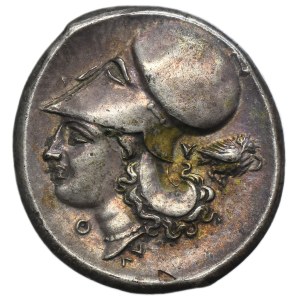
The stater of Thyrreion belongs to the characteristic group of Corinthian-type staters, widely circulated throughout western Greece during the 4th and 3rd centuries BC. Thyrreion was one of the important centres of Akarnania, a region maintaining extensive commercial contacts with Corinth and the cities of the Ionian Sea.
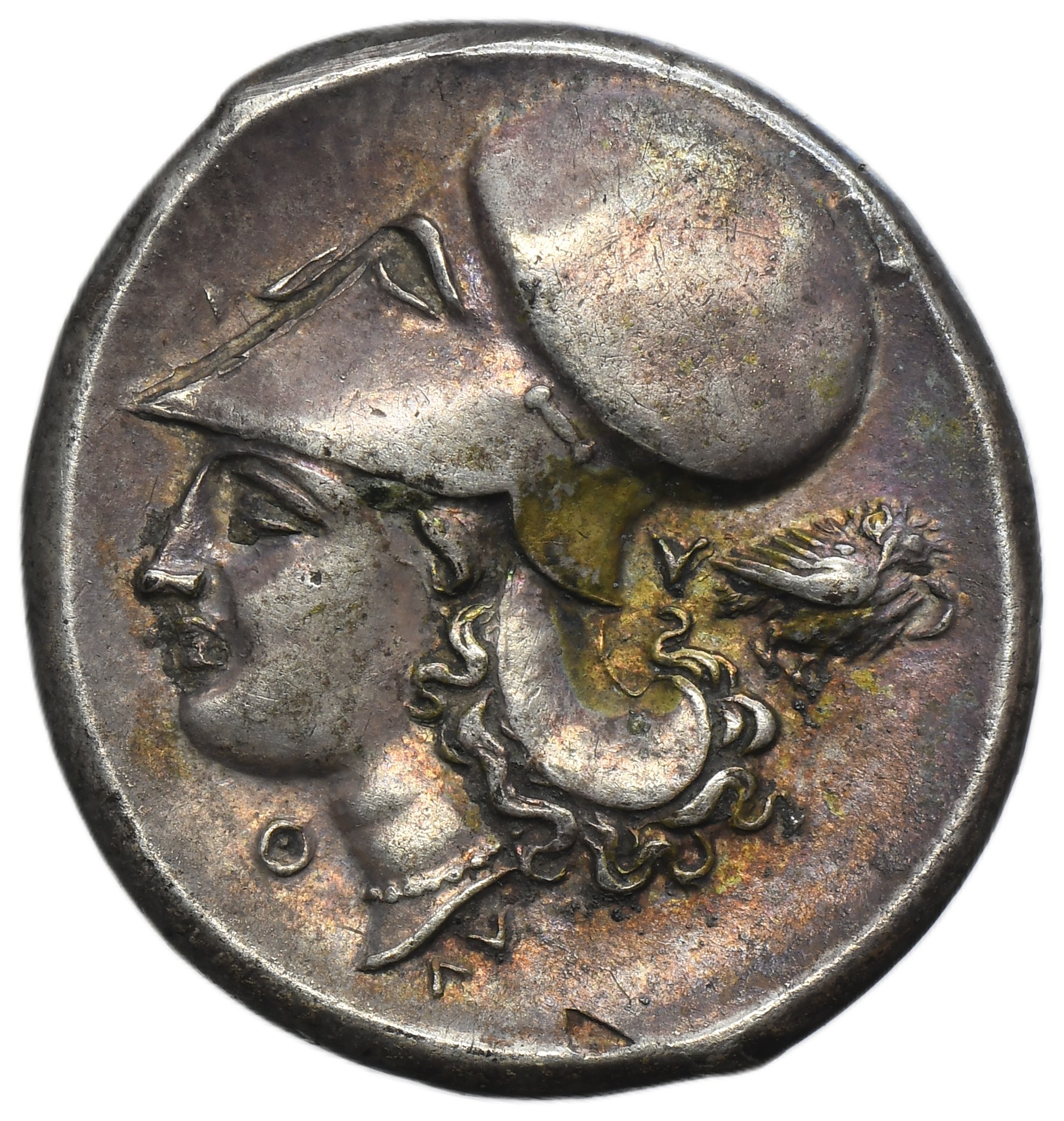
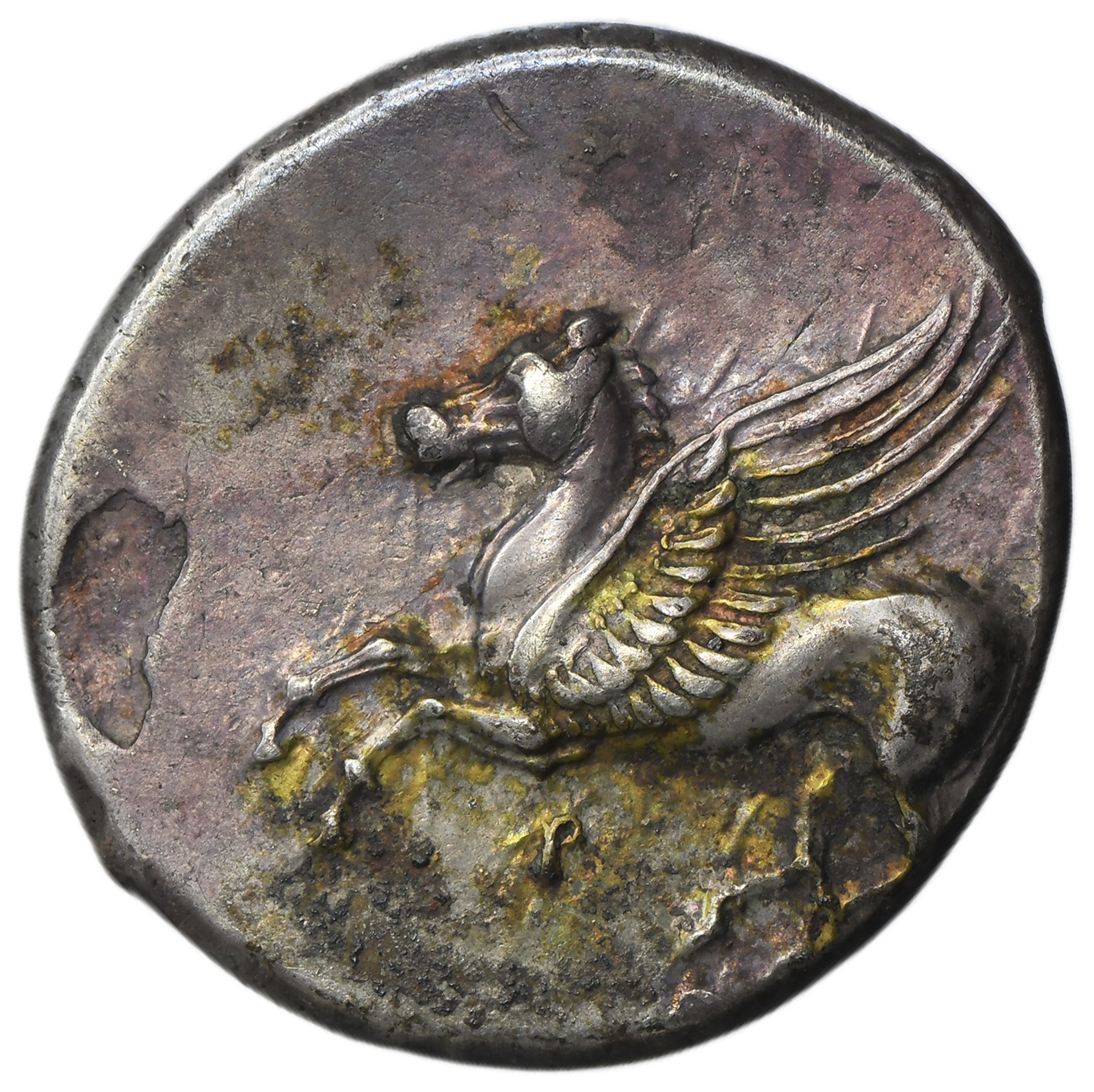
The obverse depicts Pegasus flying left, with the letter P below. The reverse features the head of Athena wearing a Corinthian helmet, also facing left. The type directly follows the famous staters of Corinth, whose iconography and weight standard were adopted by numerous mints throughout the western Greek world.
Pegasus and Athena form a coherent iconographic programme associated with the myth of Bellerophon. According to tradition, Athena helped the hero tame Pegasus by providing him with a golden bridle. Owing to the widespread popularity of Corinthian coinage, the combination of these two images became one of the most recognizable monetary types of ancient Greece.
The issues of Thyrreion testify to the importance of the Corinthian monetary standard in Akarnania. The use of the familiar Pegasus and Athena type facilitated the acceptance of these coins in interregional trade, while local letters and symbols served to distinguish individual issues.
The present specimen, dated to c. 320–280 BC, belongs to the Early Hellenistic period, when the cities of western Greece continued to employ traditional Corinthian imagery while adapting it to their own local coinage.
Ex. Artemide Aste, e-Auction 59, Lot 185.
Greece
Akarnania, Thyrreium, Stater 320-280 BC
Obverse: pegasus flying left, letter P below it
Reverse: head of Athena in Corinthian helmet left
Diameter 23 mm, weight 8.37 g