


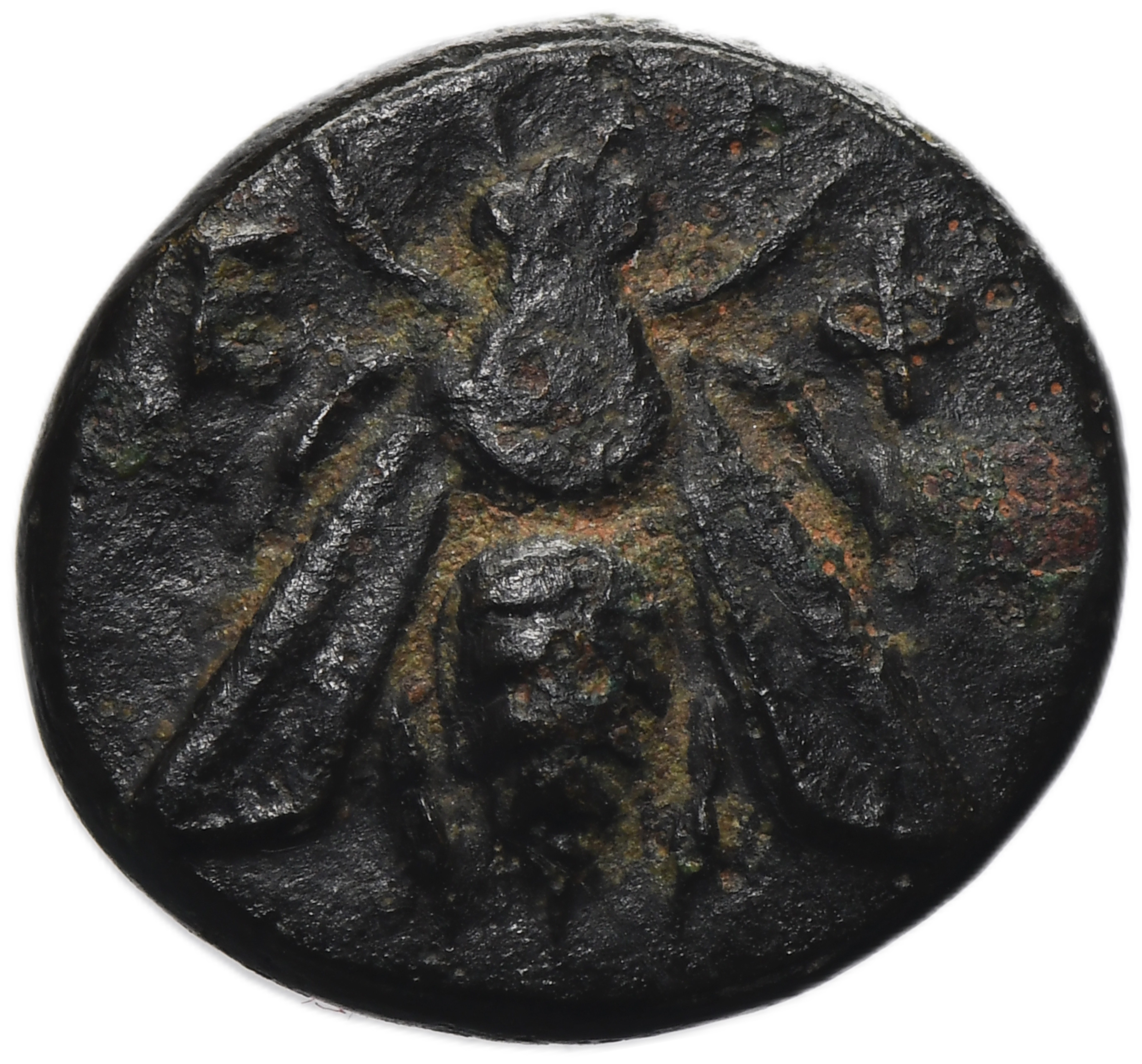
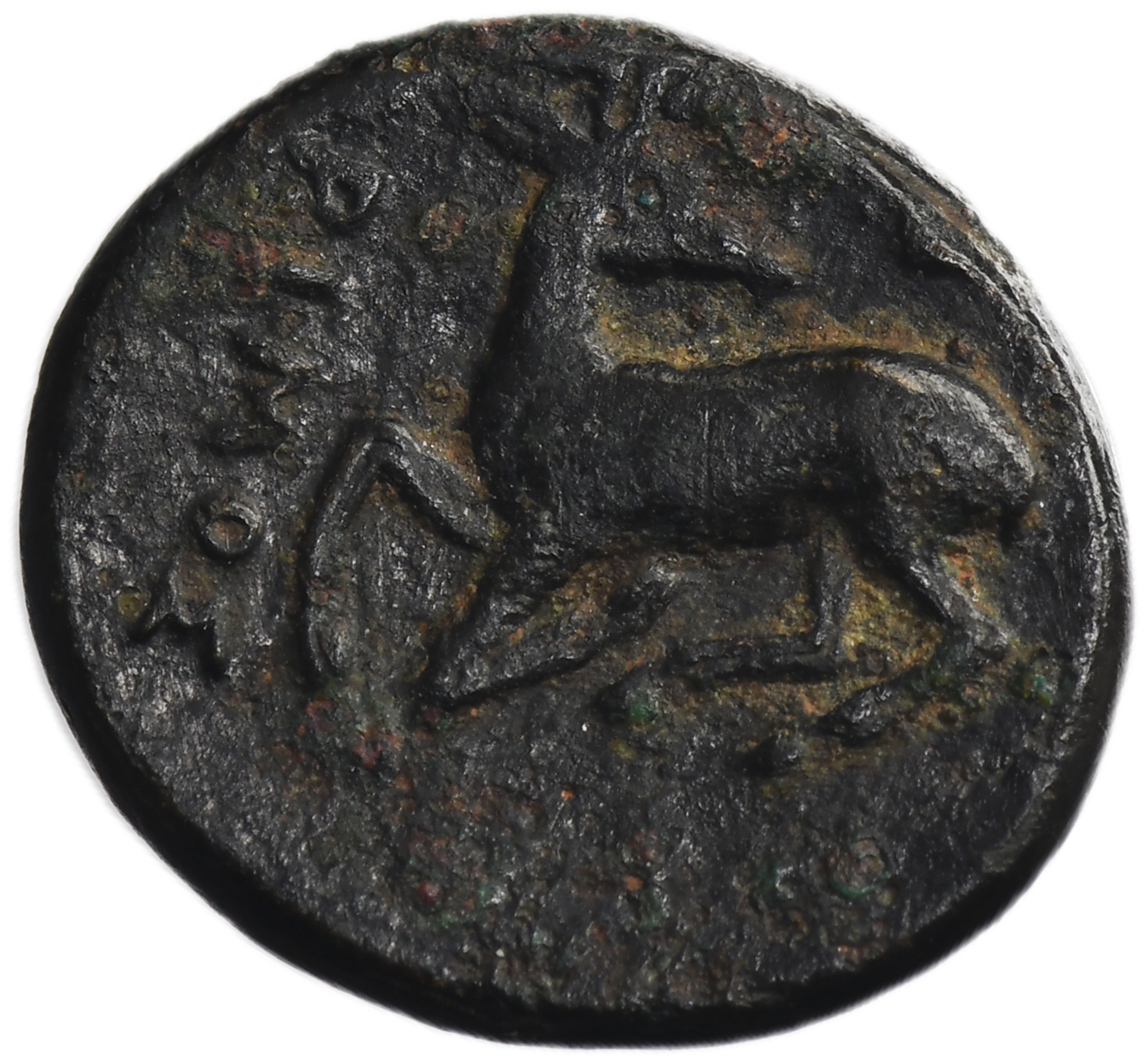


A bronze coin of Ephesos dated to 300–250 BC belongs to the early Hellenistic period, when the city—one of the principal centers of Ionia—passed successively under the control of the Diadochi following the death of Alexander the Great.
Ephesos is extensively attested in ancient sources, including Herodotus and Strabo, as a major commercial and religious center, renowned above all for the monumental Artemision, one of the most famous sanctuaries of the Greek world. The city’s coinage in the 3rd century BC is well documented and comprises both silver issues and numerous bronze denominations.
The obverse depicts a bee with the letters Ε–Φ in the fields, the ethnic abbreviation of the city. The bee is one of the most characteristic emblems of Ephesos and is directly associated with the cult of Artemis Ephesia. This motif appears consistently in Ephesian coinage from the Archaic period onward.
Greece
Ionia, Ephesos, AE, 300-250 BC
Obverse: Bee, Ε-Φ across fields
Reverse: stag recumbent left, head right
...ΑΡΙΜΟΣ
Diameter 18 mm, weight 2.21 g











