


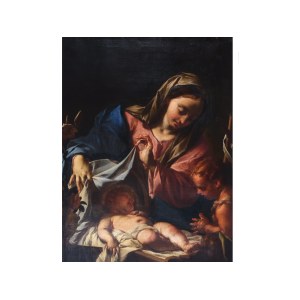
Francesco Trevisani
1656-1746, attributed
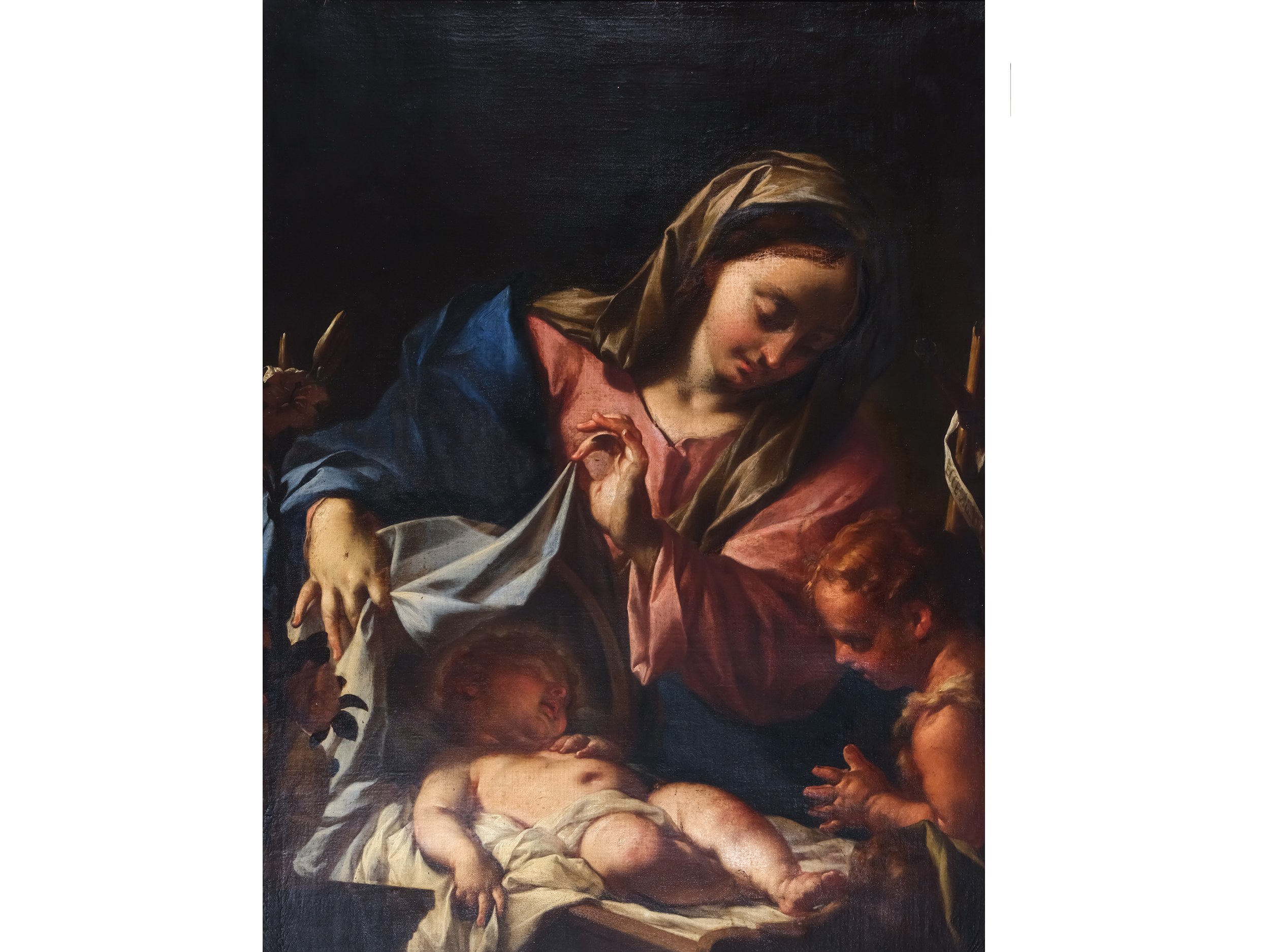
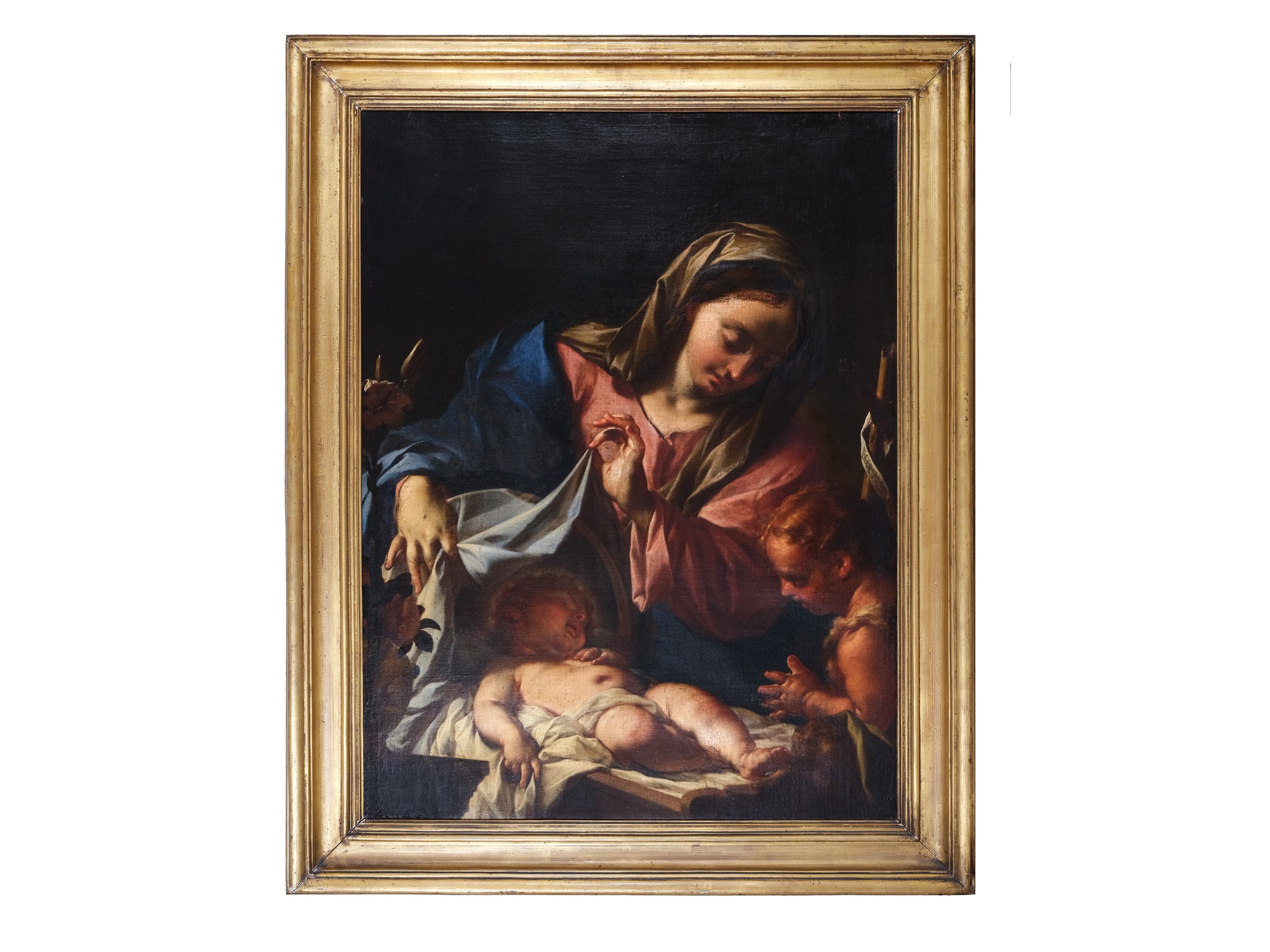
Madonna and Child with the Boy John
Oil on canvas, relined
70 x 95 cm, with frame 90 x 115 cm
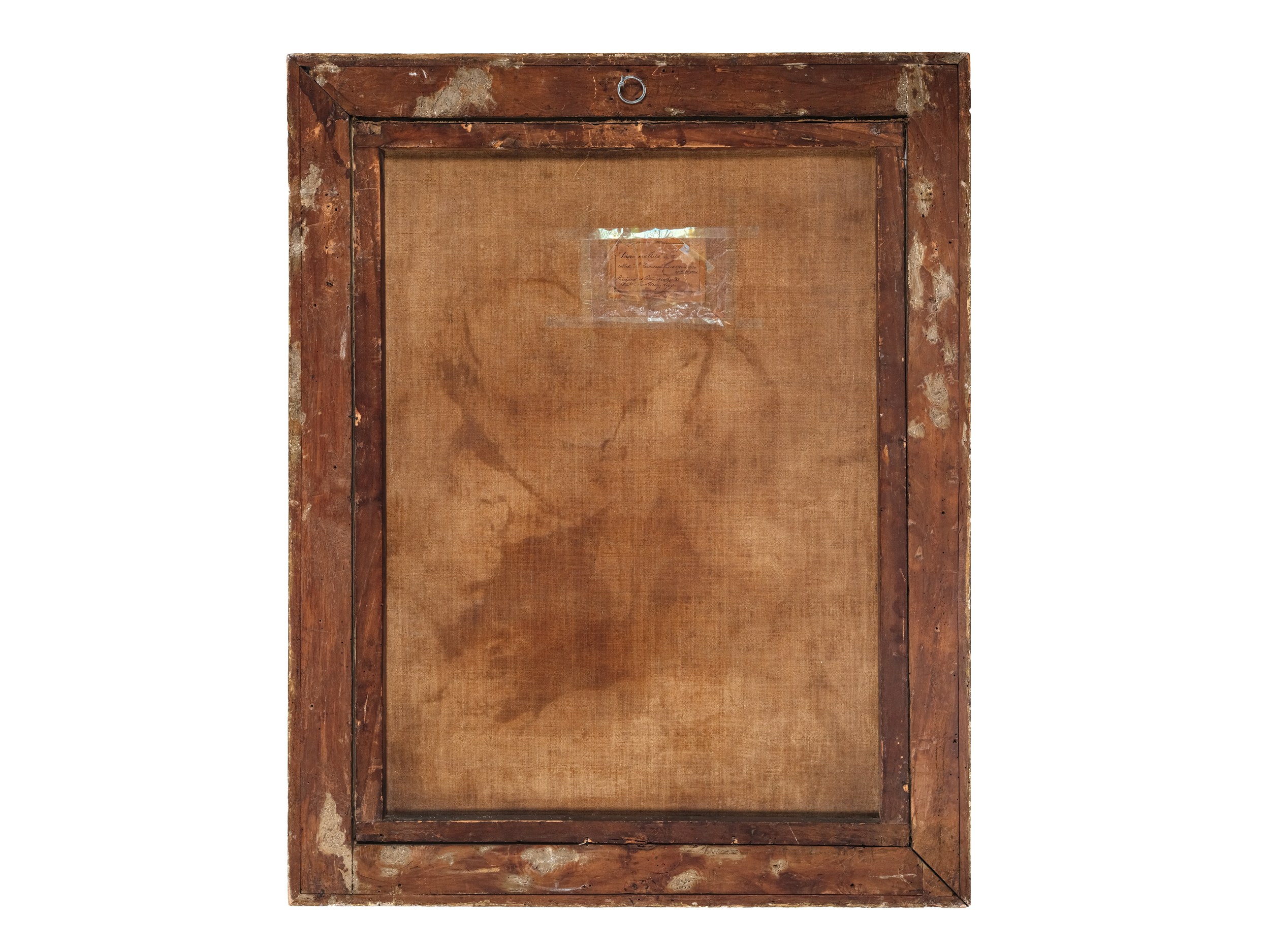
Label on the reverse: “Acquired in Rome in 1840 by the Most Reverend Henry Legge”
Francesco Trevisani is considered one of the leading figures in Roman painting of the late Baroque and early 18th centuries. Trained in Venice and active in Rome from 1678 onward, he developed—under the influence of Carlo Maratta—a distinctive visual language characterized by gracefully rendered figures and delicate colors. His religious depictions combine idealized beauty with a sensitive interpretation of the subject matter.
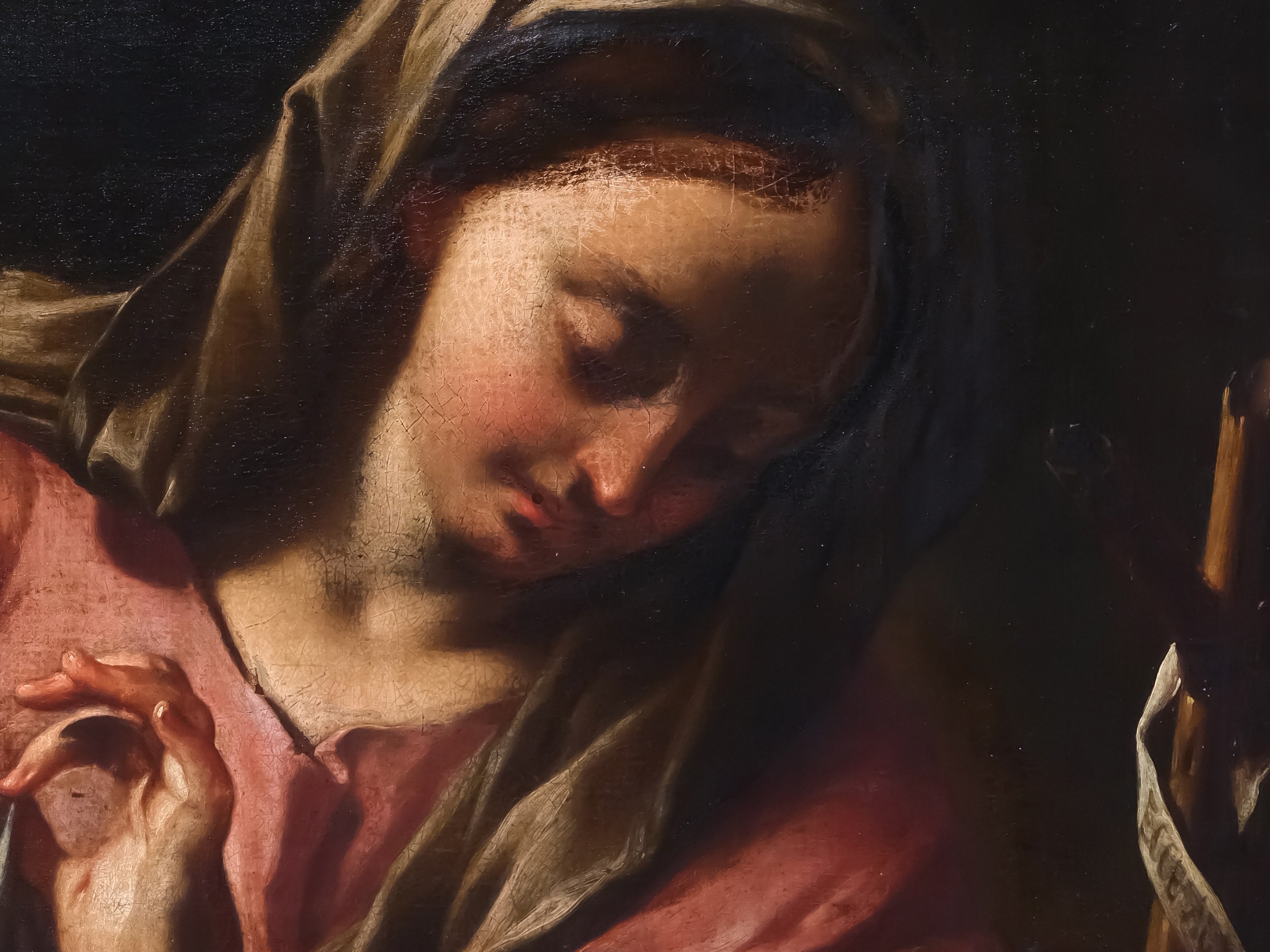
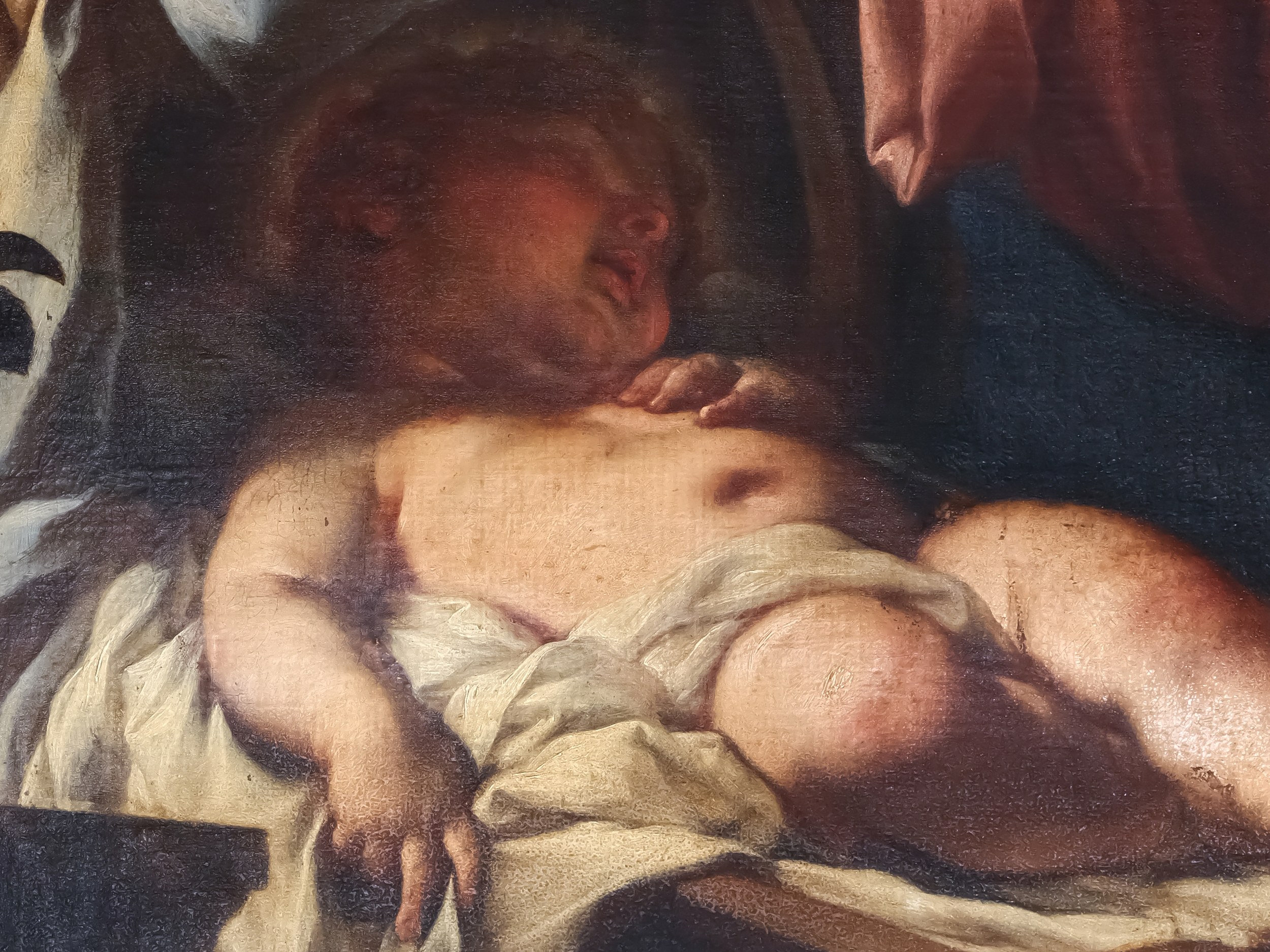
The painting depicts Mary, the sleeping infant Jesus, and the young John the Baptist in a pyramidal composition against a dark background. Carefully directed lighting highlights the figures and lends the scene an intimate atmosphere. At the center lies the infant Jesus in a cradle, his head surrounded by a faint halo. Mary, dressed in a red gown and a blue cloak, gazes gently down at her son and spreads a cloth over him. Her delicate hands, with their slightly spread fingers, emphasize the tender gesture. To her left, behind her, a lily appears as a symbol of her purity.
Next to the cradle stands the young John the Baptist with his left hand raised. In his right hand, he holds a staff with a banner on which “ECCE AGNUS” can be seen. The inscription refers to the words “Ecce Agnus Dei”—“Behold the Lamb of God”—and thus to Christ’s later role as Savior. This triptych, a composition popular since the Renaissance, combines maternal devotion with the prophetic role of John; the infant Jesus’s sleep could be interpreted as a foreshadowing of his Passion.








Vizualizate recent
Loghează-te pentru vedea lista loturilor
Preferate
Loghează-te pentru vedea lista loturilor