Henri Epstein (1891-1944)
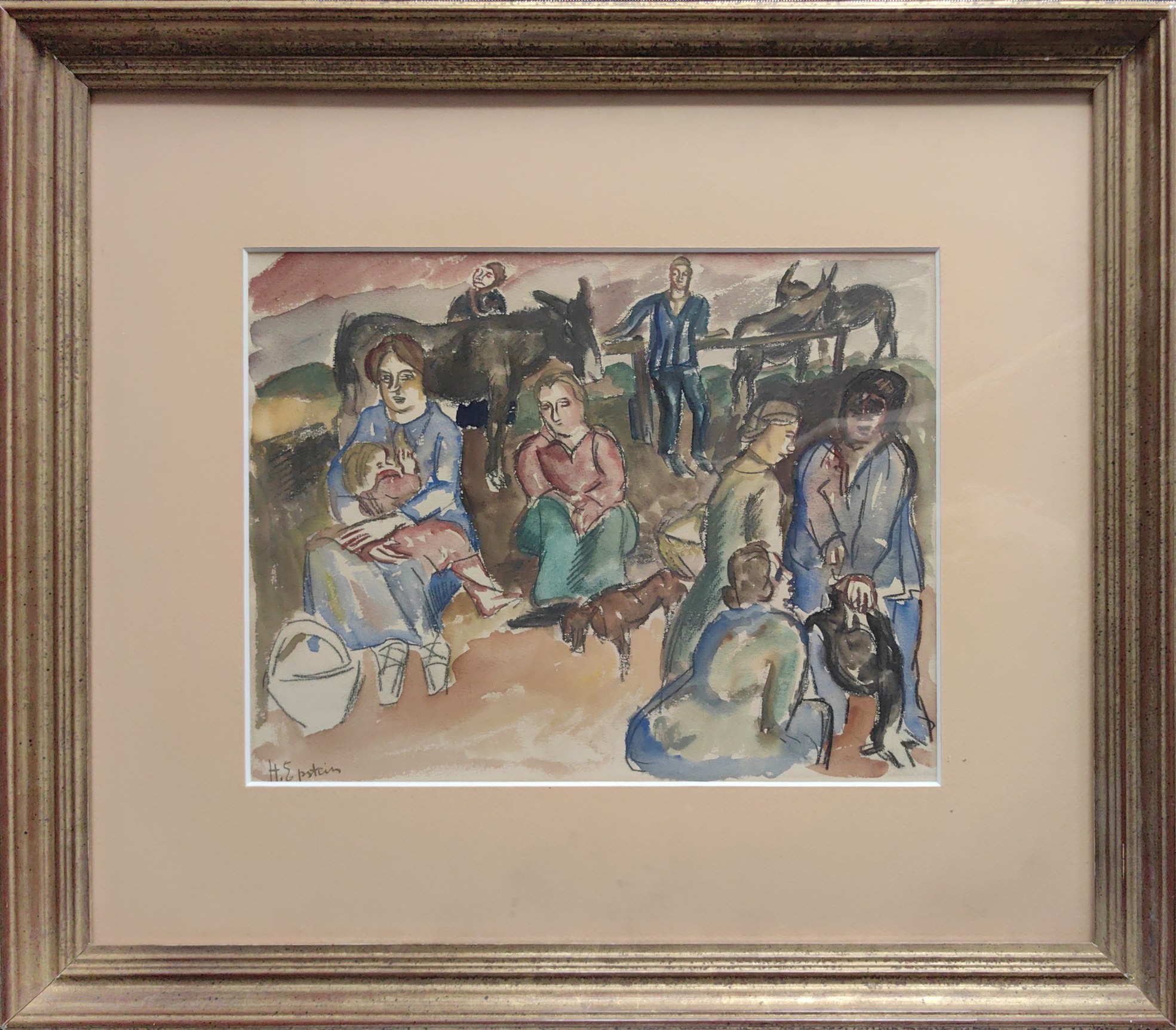
Title: Before the Exodus
Technique: watercolor and black crayon on paper
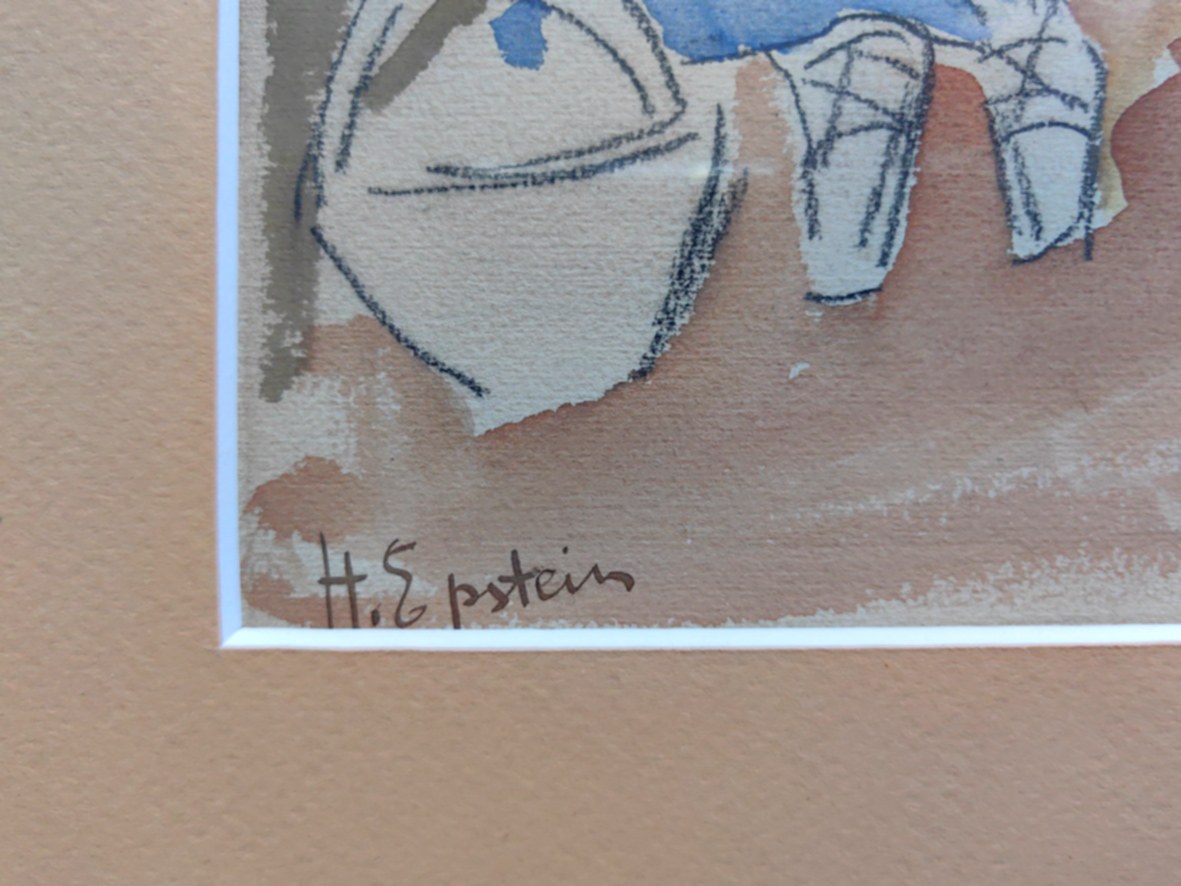
Signature: l.d.: H. Epstein
Dimensions: 23 × 30 cm (in light of passe-partout), 42 × 49 cm (with frame)
Condition: very good
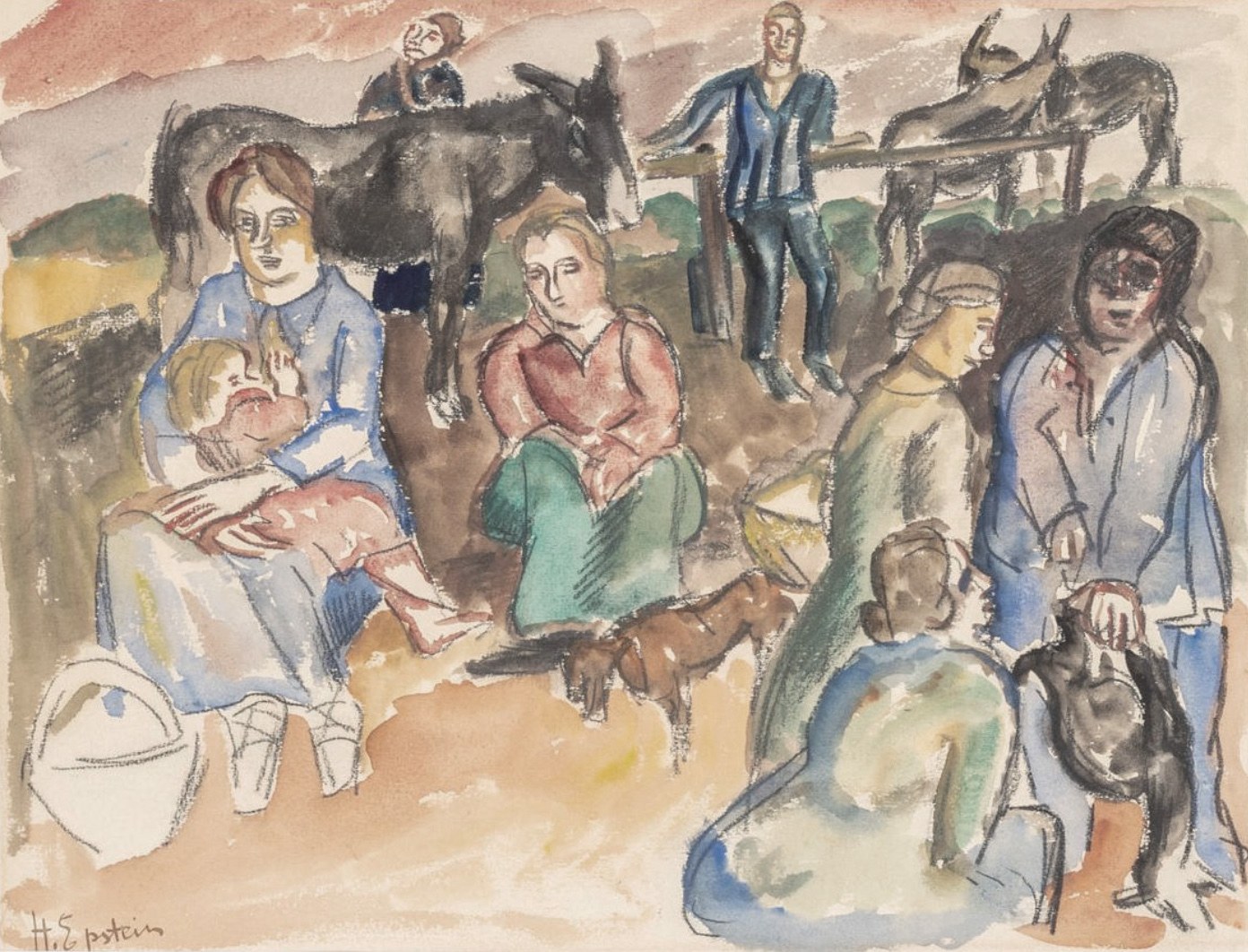
Poignant composition by Henri Epstein, one of the most important representatives of the École de Paris of Jewish descent. In the watercolor we see a group of figures gathered around heavy pack animals, captured in moments of reverie, anticipation or fatigue. The tense and emotional atmosphere - heightened by the subdued color palette - may evoke the context of pre-war fear, anxiety, the announcement of escape. The scene bears the trait of a universal human drama, but also the personal fate of the artist himself - who died in Auschwitz in 1944.
In this work, Epstein combines an expressive, synthetic line with a delicate spot of color. The simplified form, at times approaching Fauvist deformation, conveys the mental state of the characters. The figural composition, deepened by perspective contrast, retains the fullness of emotional tension.
Provenance: private collection, work framed in passe-partout and wooden frame
Henryk Epstein was born in 1891 in Lodz, Poland. In 1910 he began his studies at the Academy of Fine Arts in Munich, and from 1912 he studied in Paris at the Académie de la Grande Chaumière. At first he was primarily interested in Post-Impressionism, but later entered the circle of Fauvist painters. During World War I, he volunteered for Polish military units. After the war, he stayed in the circle of Parisian avant-garde painters in Montparnasse, associated with the rotunda La Ruche. He became friends with Amedeo Modigliani, Chaim Soutin and Marc Chagall, among others. Henry Epstein painted still lifes, nudes, figural compositions and landscapes. In France, he painted fishermen and their surroundings, ports, and still lifes depicting seafood, fish and birds. In the mid-1930s, he bought a farm near Épernon, where he often traveled. Because of his Jewish ancestry, he was arrested on February 23, 1944, and deported to the Drancy transit camp, from which his wife and daughter tried unsuccessfully to extract him. By transport No. 69 on March 7, 1944, he was taken to Auschwitz, where he died.