


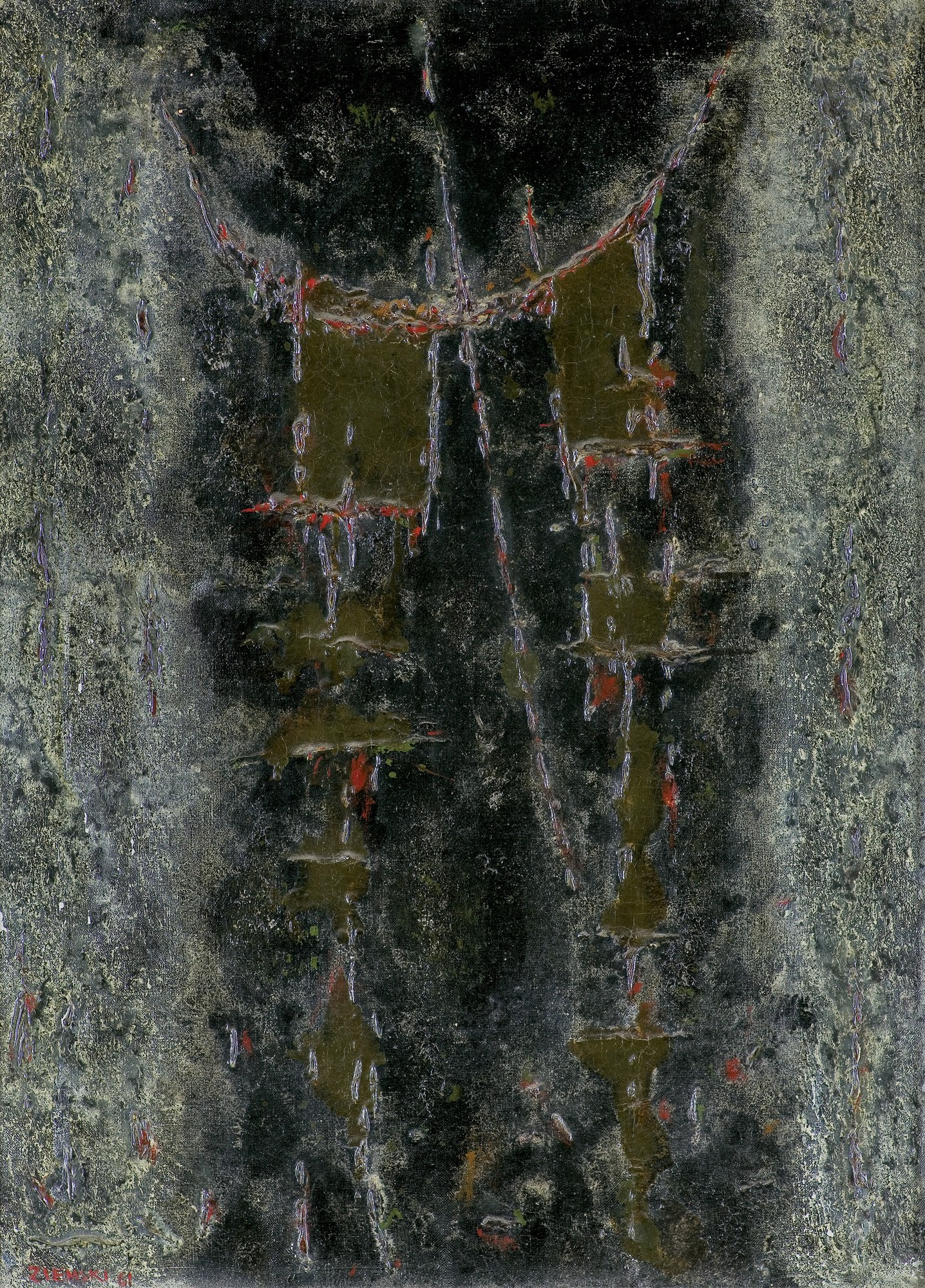
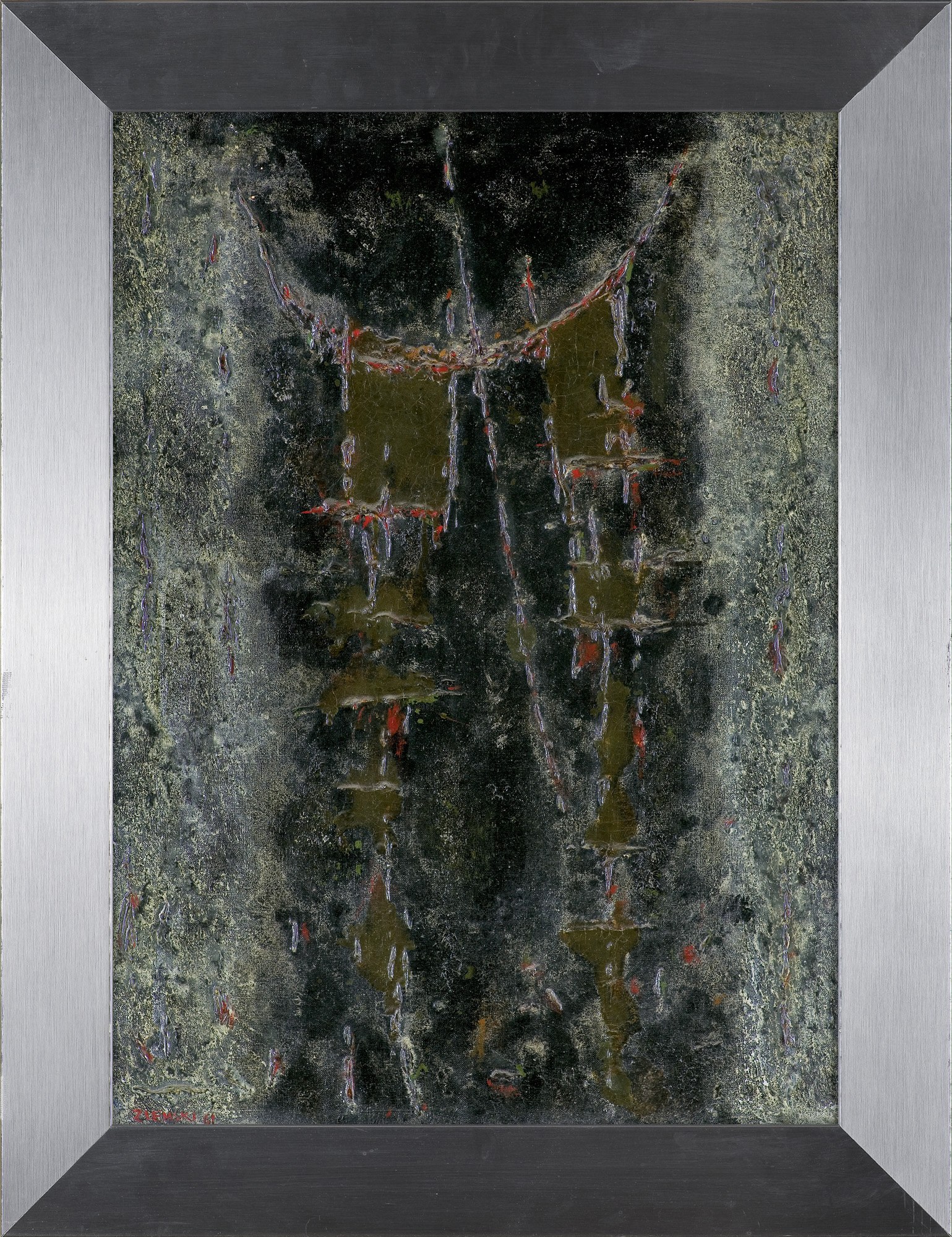
70 x 50.5 cm - oil, canvas
Signed in red paint l.d.: ZIEMSKI 61
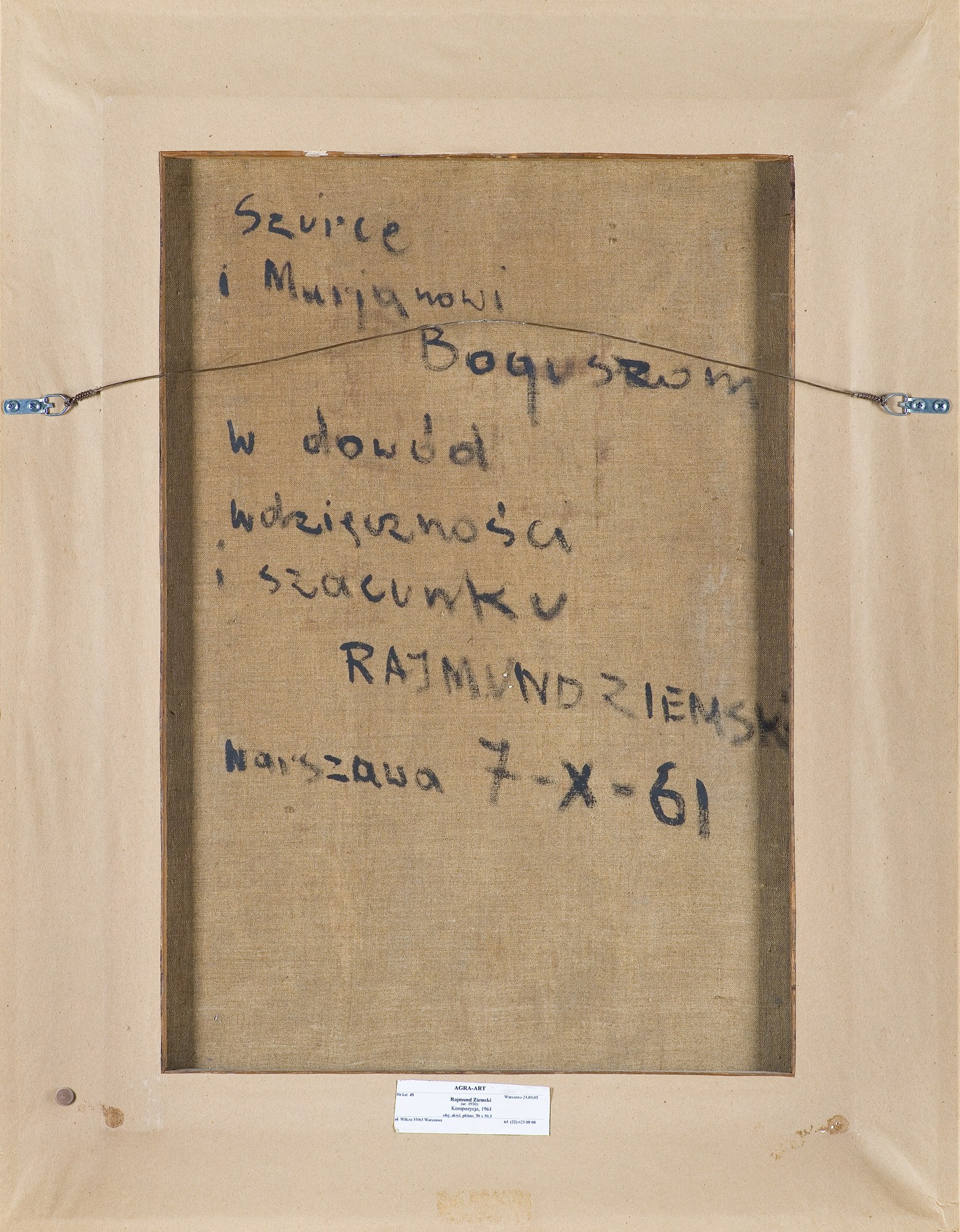
On the reverse, on canvas, inscription in black paint: Szurka | and Marian | Bogusz | in token | of gratitude | and respect | RAJMUND ZIEMSKI | Warsaw 7-X-61.
Image exhibited, mentioned and reproduced in, among others:: Image reproduced:
- J. Kania (ed.), J. Gola, M. Sitkowska, Rajmund Ziemski Painting, Academy of Fine Arts in Warsaw, Zachęta, Warsaw 2010, cat. no. 209, color ill. (on accompanying CD).
♣ Droit de suite: ♣ An additional fee will be added to the Purchase Price based on the right of the creator and his heirs to receive remuneration in accordance with the Law of February 4, 1994 - on Copyright and Related Rights (droit de suite).
Rajmund Ziemski (Radom 1930 - Warsaw 2005) studied painting from 1949-1955 under Artur Nacht-Samborski at the Academy of Fine Arts in Warsaw. In his graduating year he took part in the National Exhibition of Young Visual Arts at the Warsaw Arsenal. Since 1958, he has been teaching at his alma mater, running a painting studio there, one of the most popular among students as a graduation studio. The professor who runs it is also an artistic authority, one of the most prominent representatives of the current of non-geometric abstraction in Polish postwar painting. In his early series "Birds" (1957-1958), he operated with highly simplified shapes, painted impasto on backgrounds that were usually dark and often richly textured. Beginning in the early 1960s, Ziemski's paintings took on the characteristic shape of an elongated rectangle, with allusive fields of color and texture spreading across its fields like stretched, dramatic sheets. They bore titles suggesting connections with nature, but they were dominated by the painter's interest in color and matter, treated autonomously, in isolation from any object suggestions. These returned in a notable episode from the mid-1960s, when the artist incorporated photographic images of human faces into the structure of his paintings, then often combined into Triptychs. He later abandoned this practice in favor of further developing his coloristic attempts, going in the direction of sharp contrasts and sometimes cacophonous juxtapositions. He remains committed to the method of titling and labeling his works, which was established back in the 1960s (the large "Landscapes" series, which is still painted today, with paintings numbered with a number broken by the annual date).













Vizualizate recent
Loghează-te pentru vedea lista loturilor
Preferate
Loghează-te pentru vedea lista loturilor